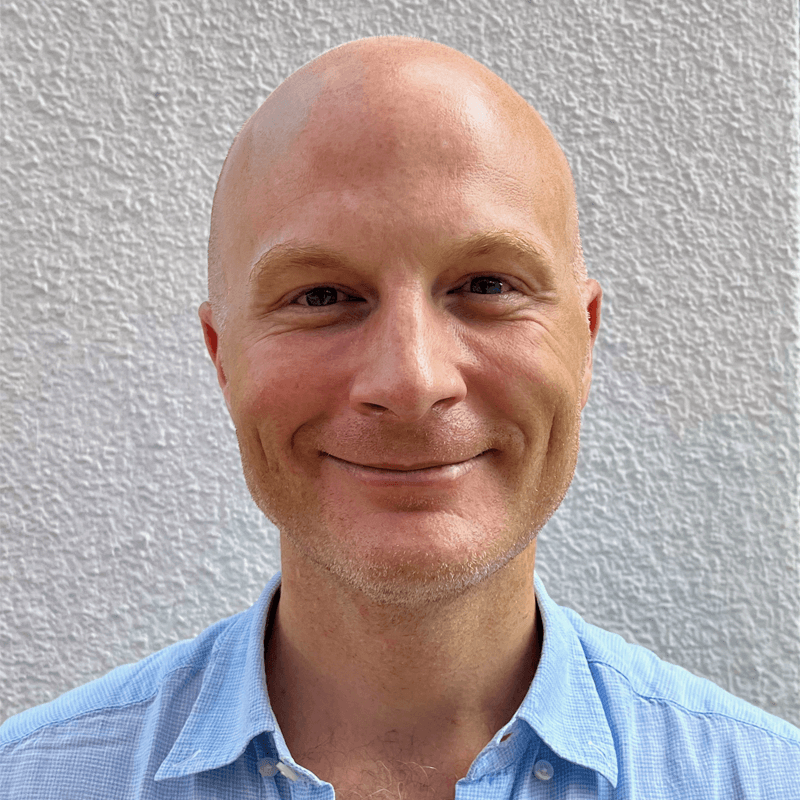
Henk’s Journey to Lead the World’s Most Influential Cycling Advocacy Organisation
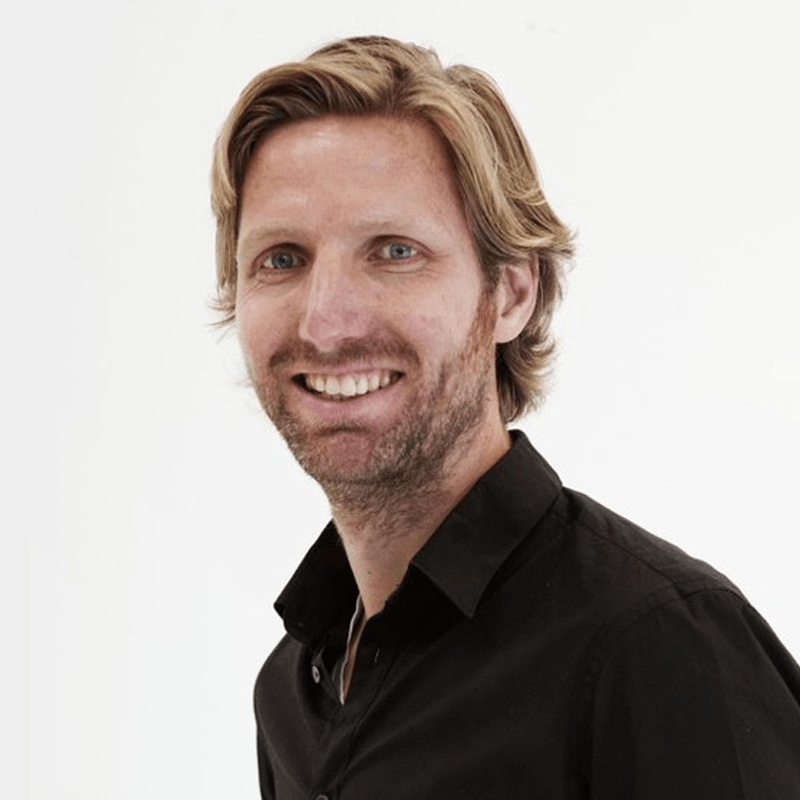
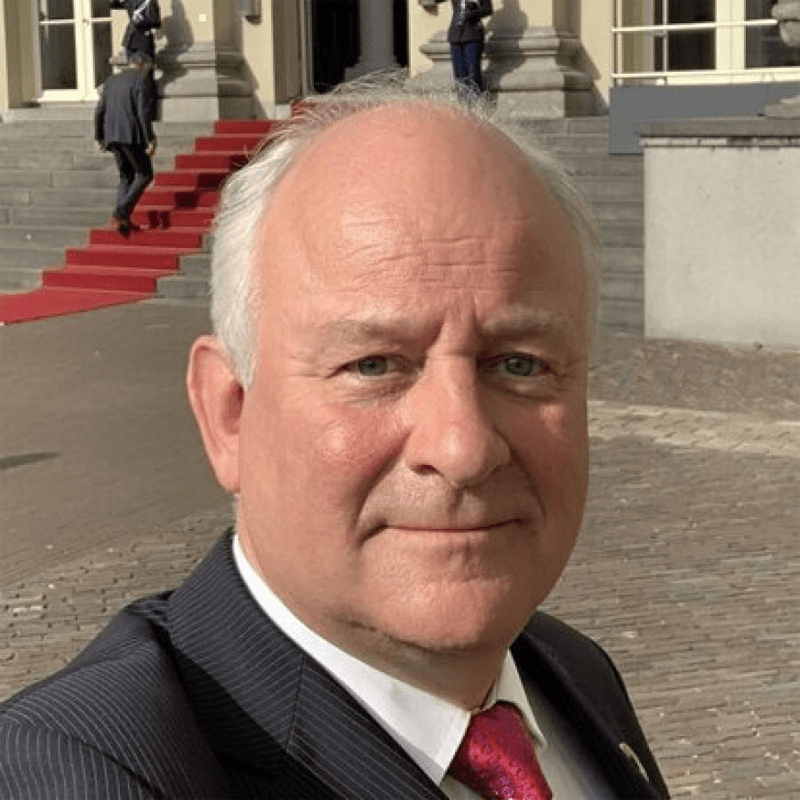
Henk Swarttouw had a distinguished career as a diplomat in the Dutch foreign service, serving in the US, France and the UK.
This culminated in becoming Dutch ambassador to Finland and later, to Denmark.
At the end of his term as ambassador to Finland the President of Finland granted Henk with Grand Cross of the Order of the Lion of Finland. This is an extremely select honour.
Henk is now an independent advisor on sustainable mobility and international cooperation.
In 2019, Henk joined the board of the European Cyclists’ Federation (ECF), and became President in 2021, a voluntary role that he still serves in today.
Henk is also a certified EuroVelo long distance cycle tourism route inspector and served on the EuroVelo Council from 2019 to 2025.
He’s married with two grown-up daughters and when not on the road, divides his time between Amsterdam and Helsingborg, in Sweden.
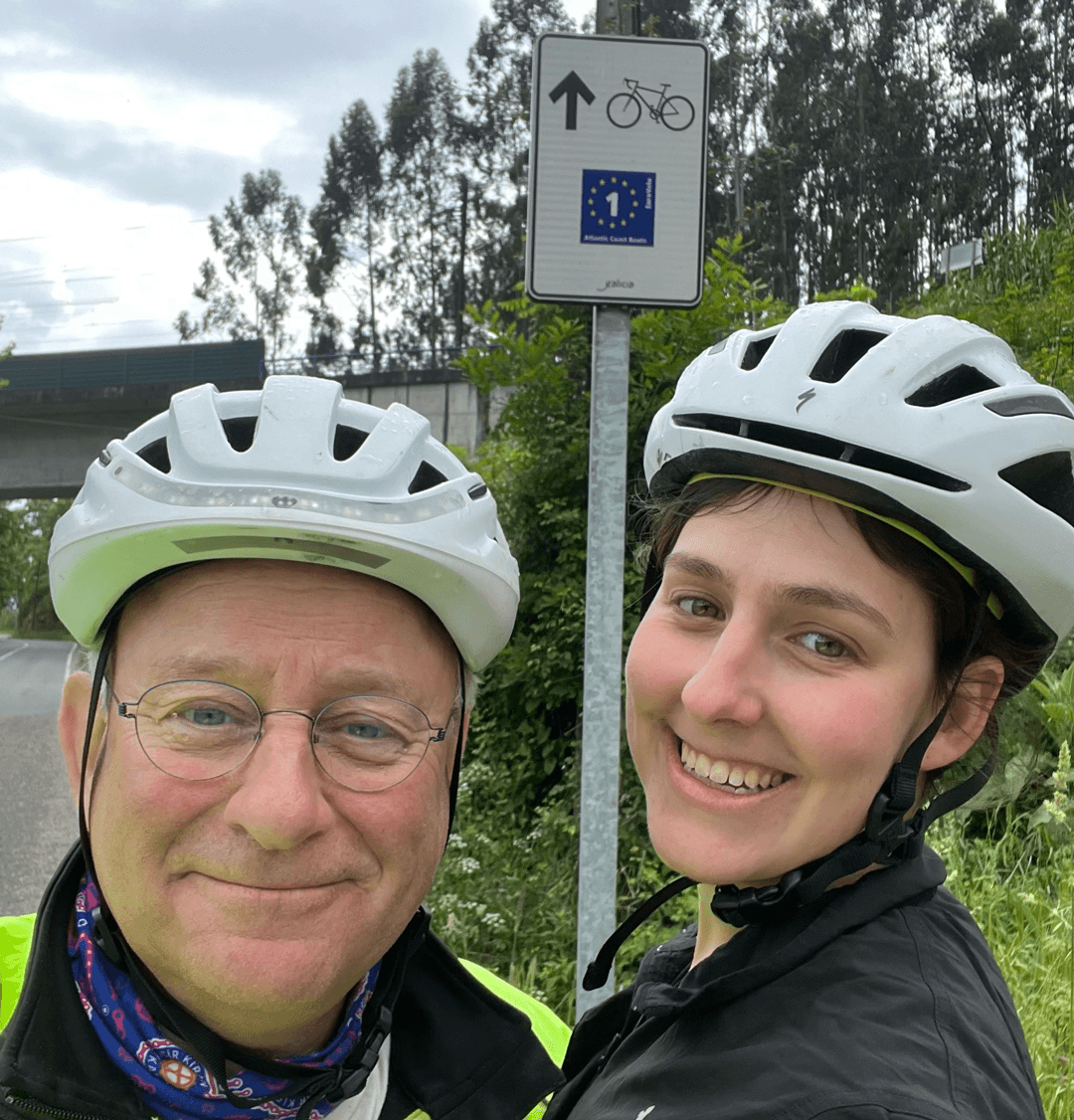
Henk riding with one of his daughters on a EuroVelo Route.
In our conversation Henk talks about his transition from diplomat to cycling advocate, that began while his was still serving the Netherlands as Ambassador to Finland.
He then shares about some of the biggest wins and challenges during his seven years on the board of the ECF, which is one of the world’s largest and most influential cycling advocacy organisations.
Henk also talks about the wonderful annual Velo-city conference that the ECF owns and oversees, first held in 1980 and why they choose to hold it in relatively far-flung locations such as Matsuyama, Japan next year, rather than sticking to central, safer bets such as London, Paris or Berlin.
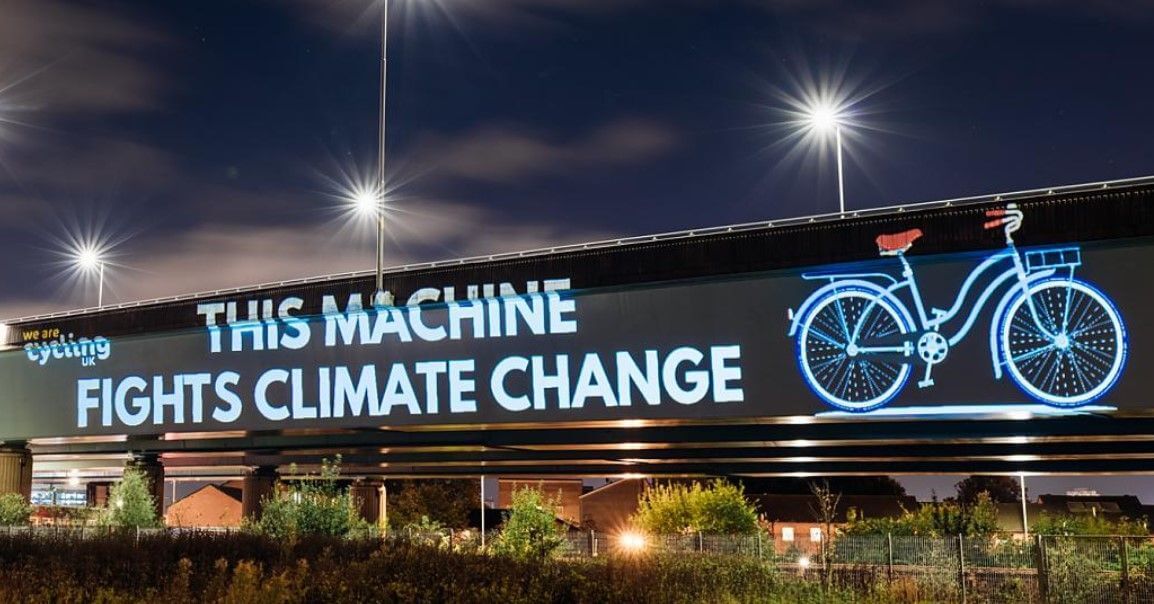
This sign was projected outside COP26 in Glasgow, where Henk was amongst delegates inside the room fighting to get cycling and active transport included in a transport declaration that initially only mentioned cars.
What’s Up?
We always finish each podcast with “What’s Up?” in which Sara and Phil share what they’ve be doing, about to do, or interesting things they’ve seen.
Sara is in the middle of running three marathons in three months, Gold Coast, Sydney and Berlin and raising funds for Better Streets.
If you would like to donate to Better Streets either via Sara’s fundraising page or via any of the five other marathoners who are raising funds for Better Streets, then please go to this link.
Phil is not nearly so athletic these days, but about to head for four weeks’ holidays to the UK and Ireland that, all going to plan, will include a in person factory visit and podcast interview with the CEO of one of the UK’s most iconic bicycle brands.
Meanwhile, Phil also spoke about the successful Initial Public Offering (IPO) on the NASDAQ exchange in New York City of bike and scooter share operator Lime. This IPO valued Lime at over US$1.7 billion and is a financial vote of confidence in the future of bike and scooter share schemes.
Ana’s fight to fix her country’s 34,000 annual road deaths
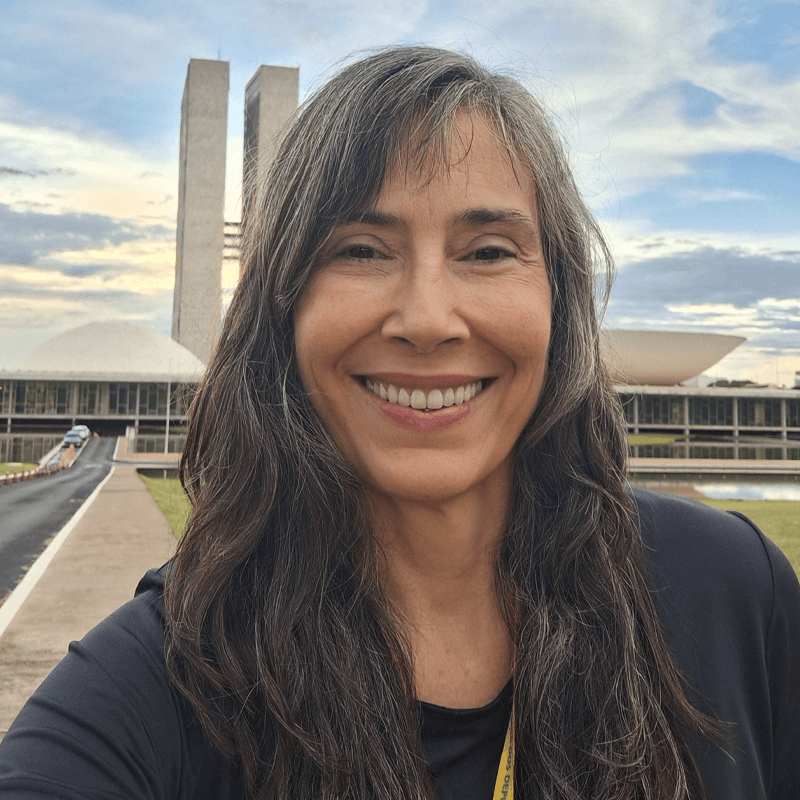
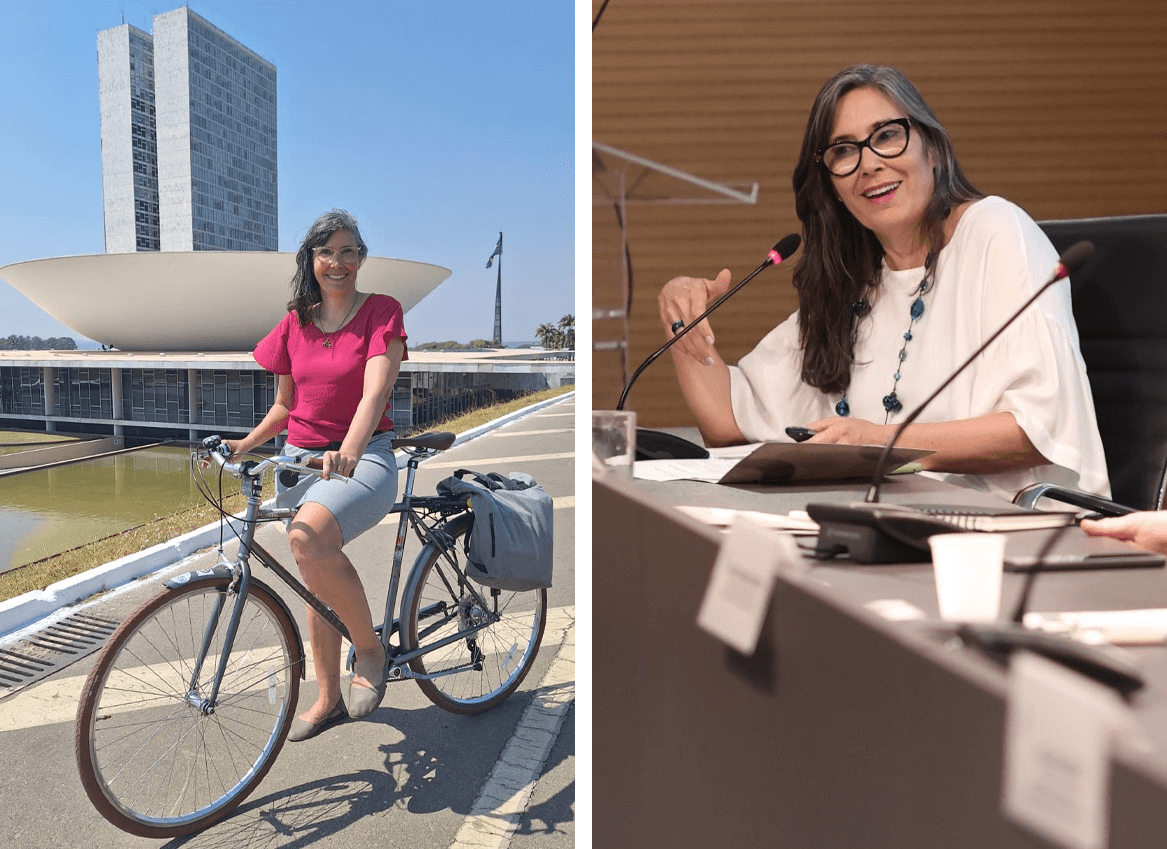
Ana Carboni is a cycling advocate living and working in a super-challenging environment. Brasilia is the purpose-built capital of Brazil. It has some famous modern architecture including its sculptural parliament building.
Left: Ana rides everywhere and is one of a small group of “car free” Brasilia families. Right: Ana is regularly speaking up for cycling.
But Brasilia was designed in the 1950’s, entirely around the automobile. The result is a sprawling, high speed car-dominated city that is deadly for cyclists and pedestrians and has very poor public transport options.
Ana graduated and later practised as a clinical psychologist, before moving to a career in human resources. She moved to London where she worked at the Brazilian Embassy and also completed a masters degree in Human Resource Management and Organisational Analysis at Kings College London.
Upon returning to her home city of Niterói which is a beautiful coastal part of the greater Rio di Janeiro urban area, Ana became deeply involved in advocacy.
She later moved to Brasilia where she is a Project Manager for the UCB (Brazilian Cyclists Union), the peak national lobbying organisation in this vast country of over 200 million citizens.
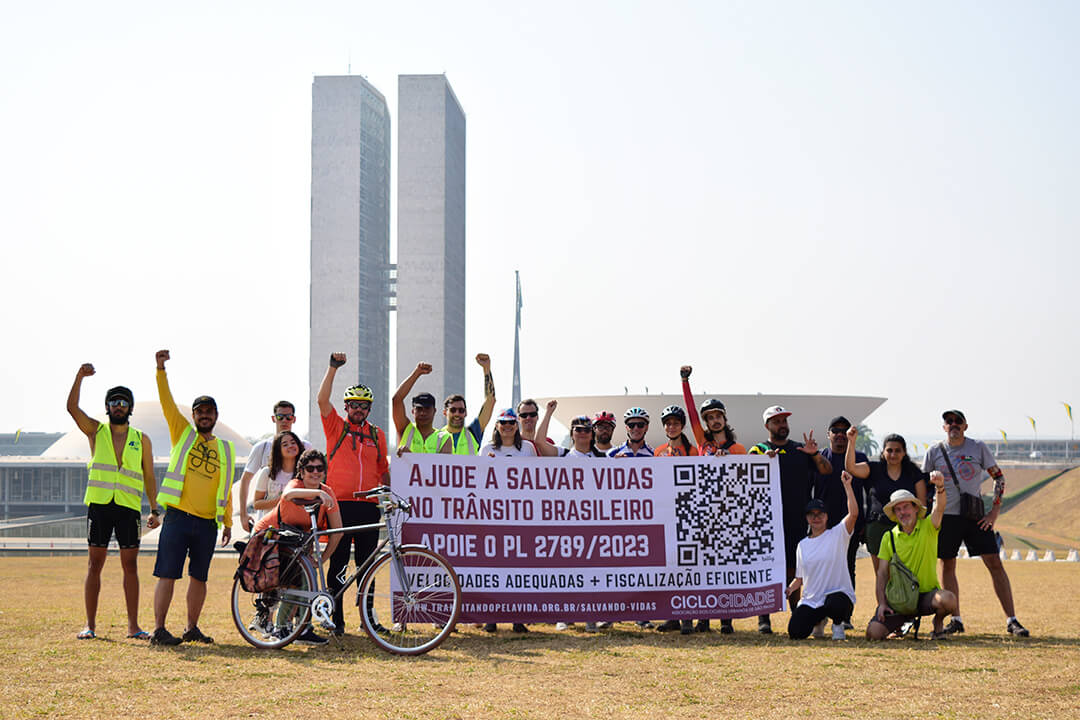
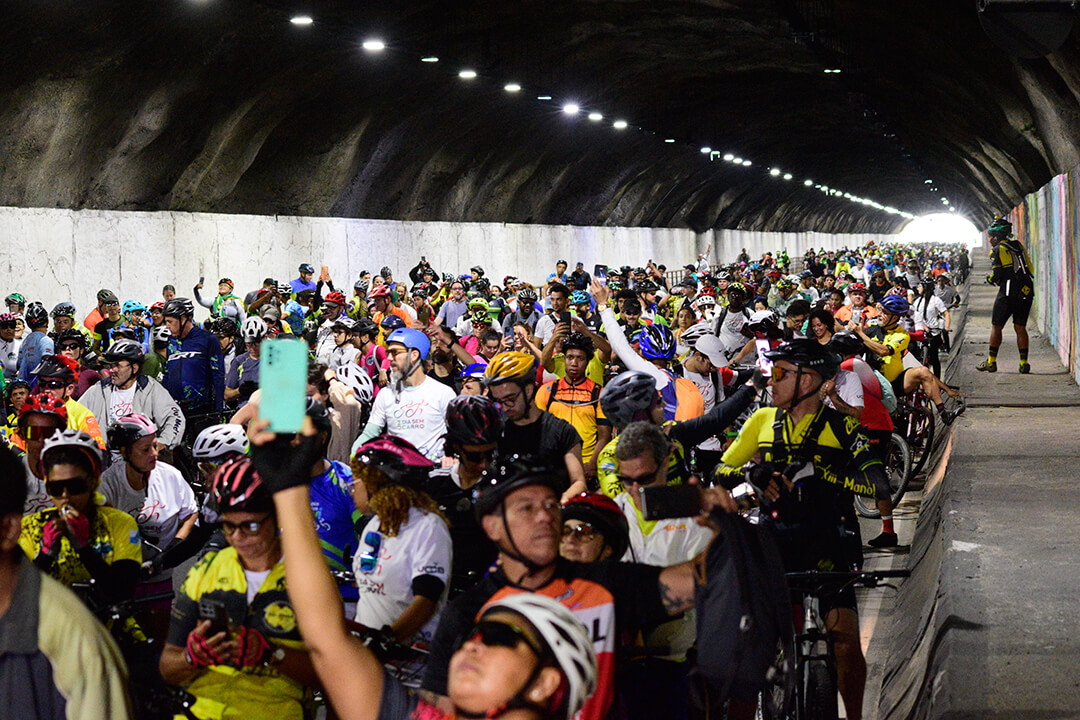
Cyclists protesting against excessive speed limits outside Brazil’s parliament.Thousands of cyclists in an event at Rio de Janeiro on 15th October 2025.
Very rarely do cycling podcasts, including ours, stray far from the usual pattern of guests from Europe or North America. So it was both fascinating to learn more about Brazil, but shocking to hear how bad things are there, compared to many other developed nations.
Here are some stark statistics that we share during this episode:
Cyclists
Between 2014 and 2024, Brazil recorded 14,834 cyclist deaths, maintaining a tragic and steady average of roughly four fatalities per day nationwide.
Fifteen years ago, cyclist fatalities made up less than 1% of total traffic deaths. Today, they account for roughly 3.5% of all road fatalities.
Most victims are male, working-class citizens, who rely on bicycles for transport. By far the largest cause of death is being hit by motor vehicles.
Pedestrians
The annual pedestrian death toll ranges from 5,000 to 6,500 per year.
In 2023 5,340 pedestrians were killed, comprising 15.6% of the total road toll that was a staggering 34,110 people killed.
Overall
Brazil’s death rate through traffic violence was 15.7 people per 100,000 inhabitants in 2021, ranking it 118th in the world.
By comparison, “best practice” countries such as Japan, UK, Switzerland and the Scandinavian countries are in the range of two to three deaths per 100,000 inhabitants per year. The Netherlands has 4.1 deaths per 100,000 inhabitants. Canada is 4.7, the USA, 14.4.
Niterói’s Exceptional Example
Niterói is a coastal city of about half a million residents located just across the bay from the centre of Rio de Janeiro. It is the wealthiest city in Brazil on a per capita basis.
It has a citywide speed limit of 30 kph, extensive bike infrastructure including the three busiest bike lanes in Brazil. At least one of these lanes counts over 7,000 riders per day.
In stark contrast to the rest of Brazil, between 2020 and 2024 there were no cyclist fatalities at all in the city of Niterói.
We always finish each podcast with “What’s Up?” in which Sara and Phil share what they’ve be doing, about to do, or interesting things they’ve seen.
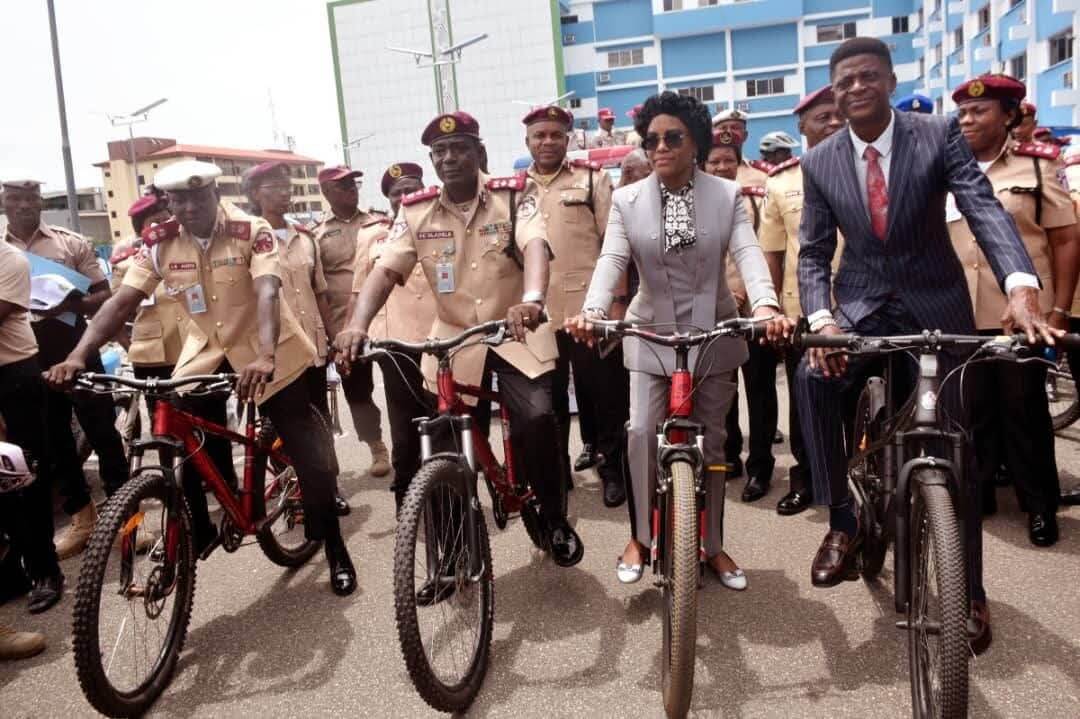
Sara began with World Bicycle Day, that was held the same day we were recording. Here is a photo provided by one of Sara’s colleagues on the World Cycling Alliance board:
World Bicycle Day in Nigeria with World Cycling Alliance board member Emmanuel John on the right.
Sara’s What’s Up also included news of the Australian federal government’s historic announcement of half a billion dollars for cycling and walking infrastructure funding.
Here is an announcement from the peak advocacy group We Ride Australia about the initial funding. And here is a follow up announcement that the funding will be “front loaded” to speed up its impact.
Phil spoke about attending the massive China Cycle expo next year, instead of his usual annual trip to Eurobike. We previously had an interview with Sam Johnson from the World Bank who spoke about a resurgence of cycling in some of China’s major cities after decades of decline due to policies favouring cars over bicycles. You can listen to that episode here.
New European Cycling Industries CEO Gets Proactive on Advocacy
Our guest this month is Paul Walsh.
Paul is originally from Ireland, has lived in Brussels for over 20 years and brings more than 12 years of experience working in Brussels-based industry associations.
He holds a master’s degree in Association Management and has worked across a wide range of sectors, including aviation, research and innovation, tourism, and medical devices.
Exactly one year prior to our conversation, Paul took on the CEO role of Cycling Industries Europe, which since then has merged with Europe’s oldest industry group, CONEBI, to form European Cycling Industries (ECI).
Paul was appointed CEO of the new group and has bold ambitions for this new, larger, united organisation.
Multiple times throughout our conversation, Paul mentions the European Cyclist Federation (ECF) which is an advocacy group that Paul’s industry association not only works closely with, but also donates significant funds towards.
We previously interviewed Jill Warren the former CEO of the ECF and if you’re interested in in learning more about that organisation you can find that interview here.
Cycling faces an opportunity for increased government support and growth thanks to the current “oil crisis” In our conversation Paul refers to the 10 point plan to help reduce oil dependency, recently released by the ECF which Paul’s organisation and others have endorsed. Here is the ECF Manifesto
He also outlined ECI’s Strategic Priorities:
To create regulatory certainty for e-bikes.
To do a better job on data, including bicycle sales.
Infrastructure for cycling.
Leasing – favourable for bicycle purchases. Reproducing existing successful German and Belgium schemes Europe-wide.
Developing a Bicycle Industry Strategy that is adopted by the European Commission.
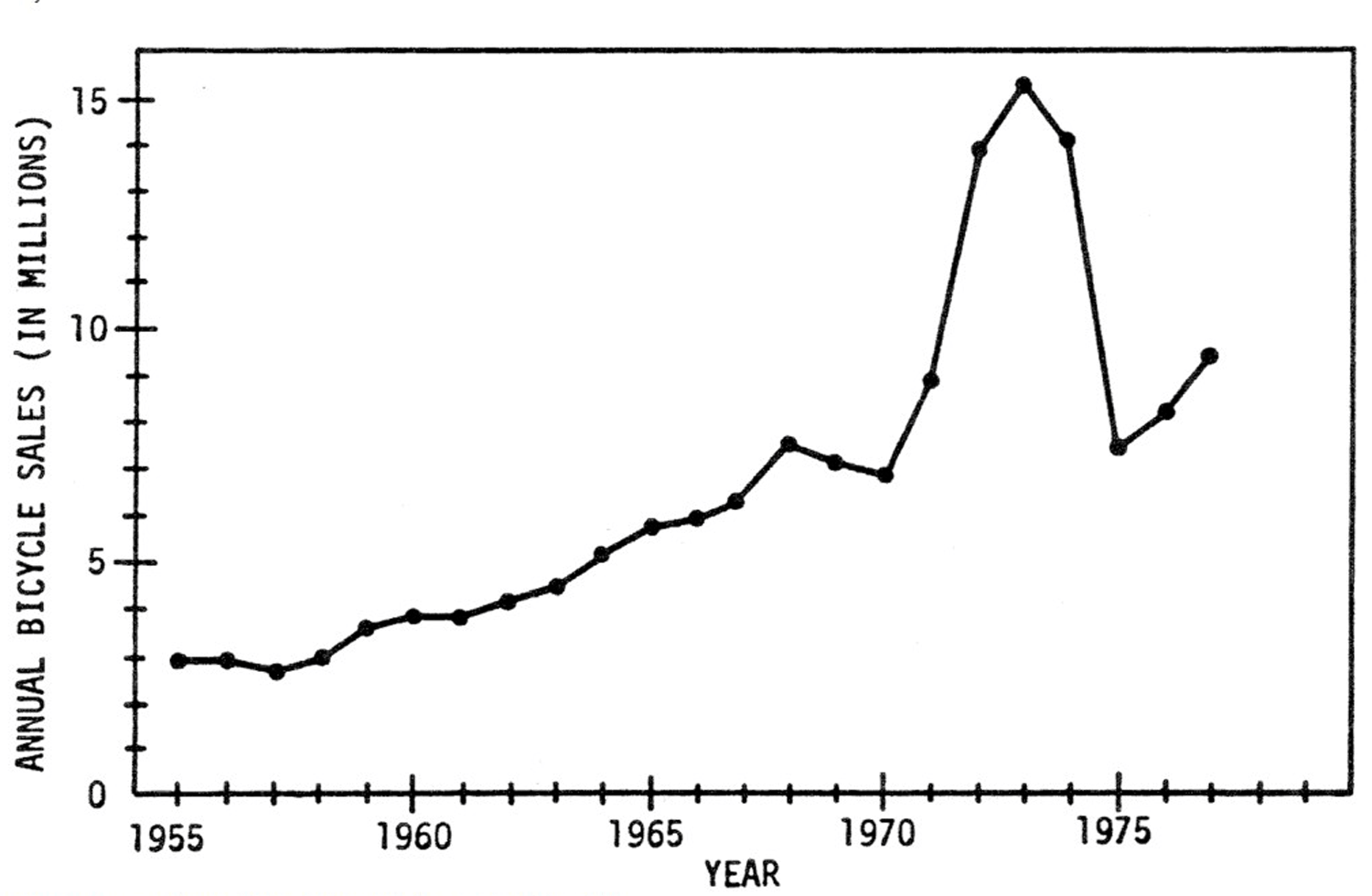
We asked Paul about any recent increases in bike sales in Europe do to the current “oil crisis”. He said it was too early to have data about this. But here is a chart of what happened to bicycle sales in the USA as a result of the “Arab Oil Embargo” of the early 1970’s. It will be interesting to see what happens to bicycle demand over the coming months.
Paul described a new “I cycle to work” campaign that the ECI will be launching soon. You’ll be able to see it via their website here: European Cycling Industries
What’s Up?
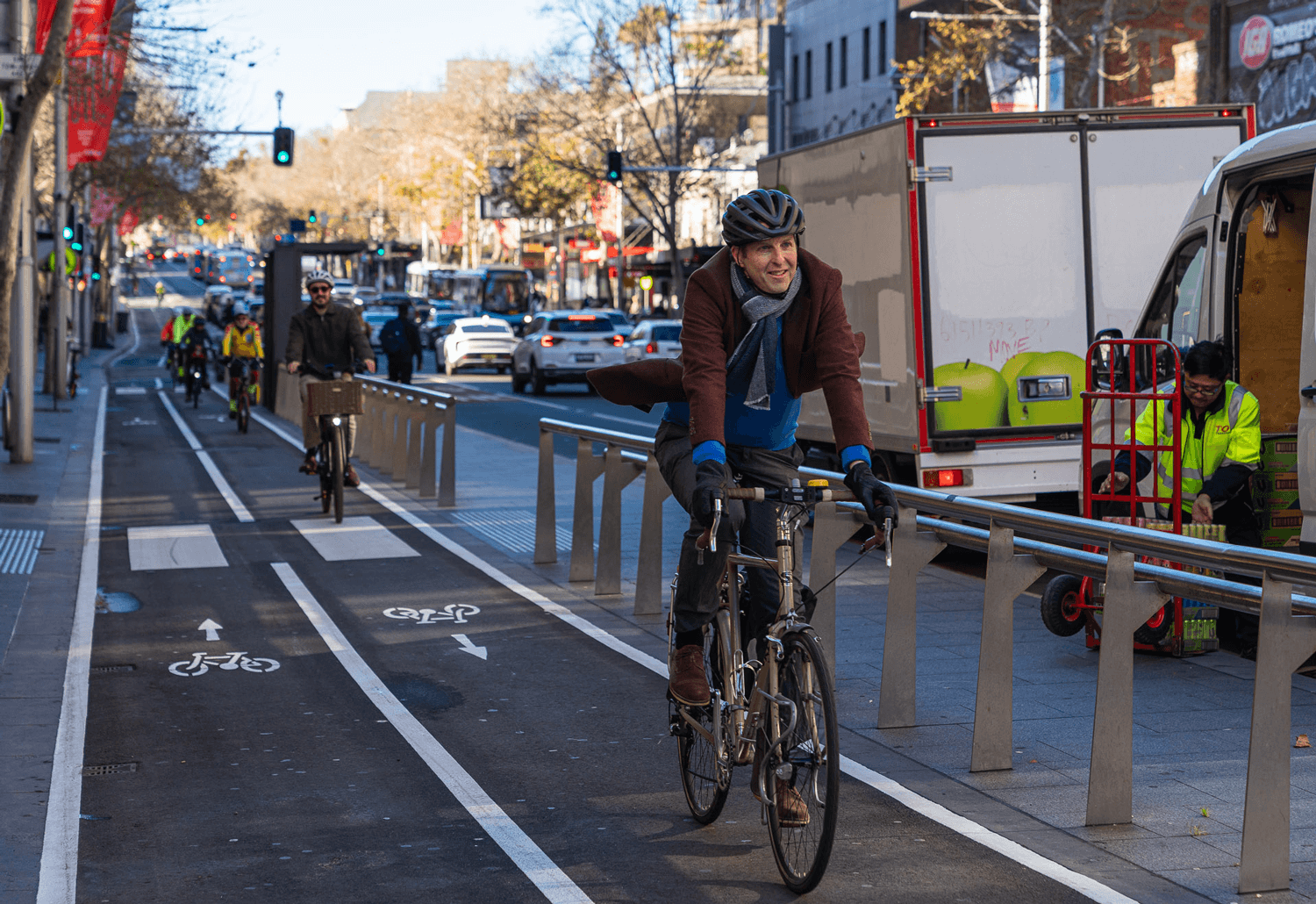
Sara mentions the new Oxford St protected cycleway, which is newly opened on a six lane arterial road into the heart of Syndey’s city centre, that’s getting thousands of rides per day. Here’s a photo, courtesy of Nick Langley, City of Sydney:
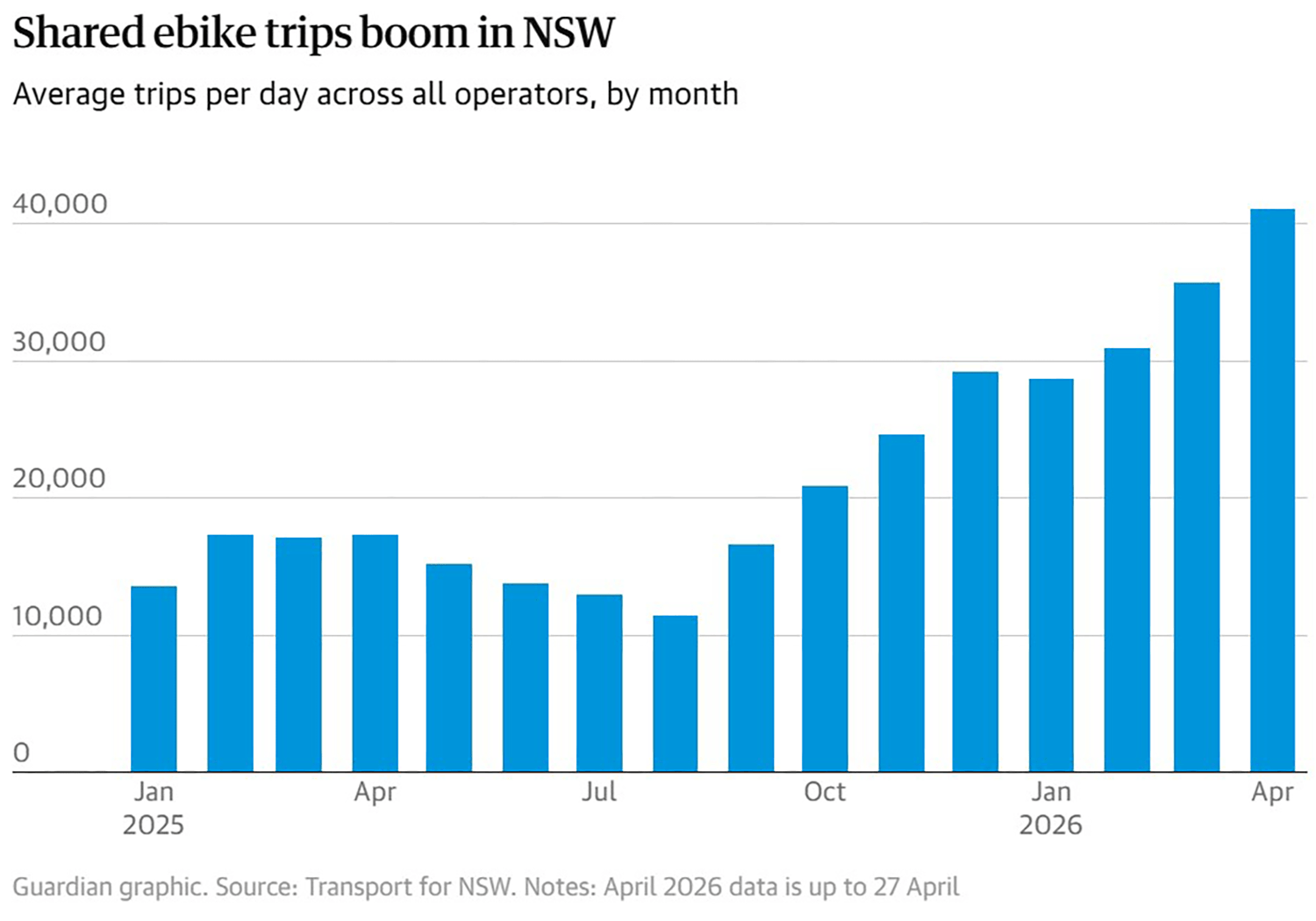
Sara also mentions the huge growth in share bike ridership.
Here is a chart, first published in The Guardian, that illustrates her claim:
Phil mentions Lime and thought that they have exceeded US$1 billion in annual revenue. This may be true now due to their massive recent growth, but the latest published data shows US$646 revenue for calendar year 2024. In October 2025 Lime announced that they had seen 1 billion total rides since their launch in 2017.
Clarification
Towards the start of our conversation with Paul, Sara says that there are more bicycle sales than car sales in Australia. That’s only partly correct… although it was true in the decade prior to covid and during the two covid years, since then car sales have slightly exceeded bicycle sales, even when combining analogue and e-bike sales.
Jullietta Jung and Jennifer Kent are launching a new campaign in Australia that is equally relevant around the world.
30Now will be calling for the speed limit on all local streets to be lowered to 30 kilometres per hour (20 miles per hour).
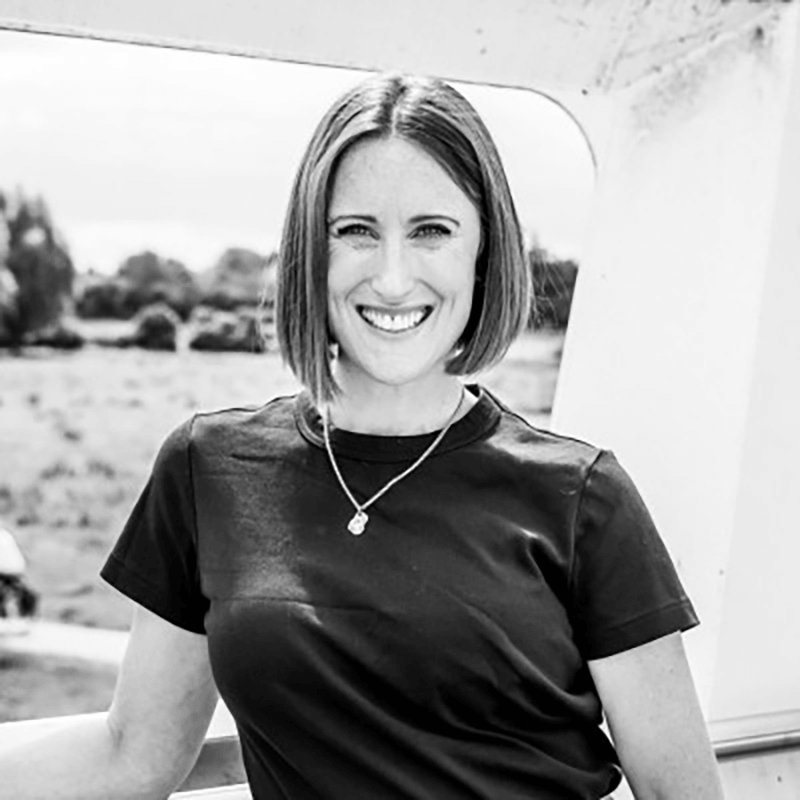
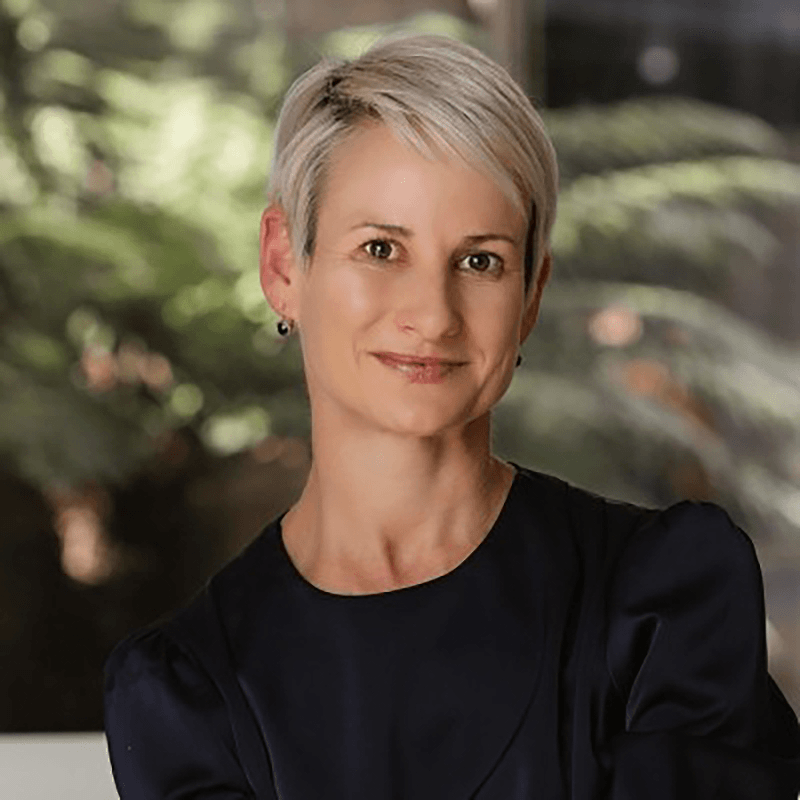
Jennifer Kent (pictured above) is Associate Professor, Urbanism at the University of Sydney in New South Wales, Australia. She’s also Honorary Associate Professor, Institute of Transport and Logistics Studies (ITLS).
Her research interests are at the intersections between urban planning, transport and human health.
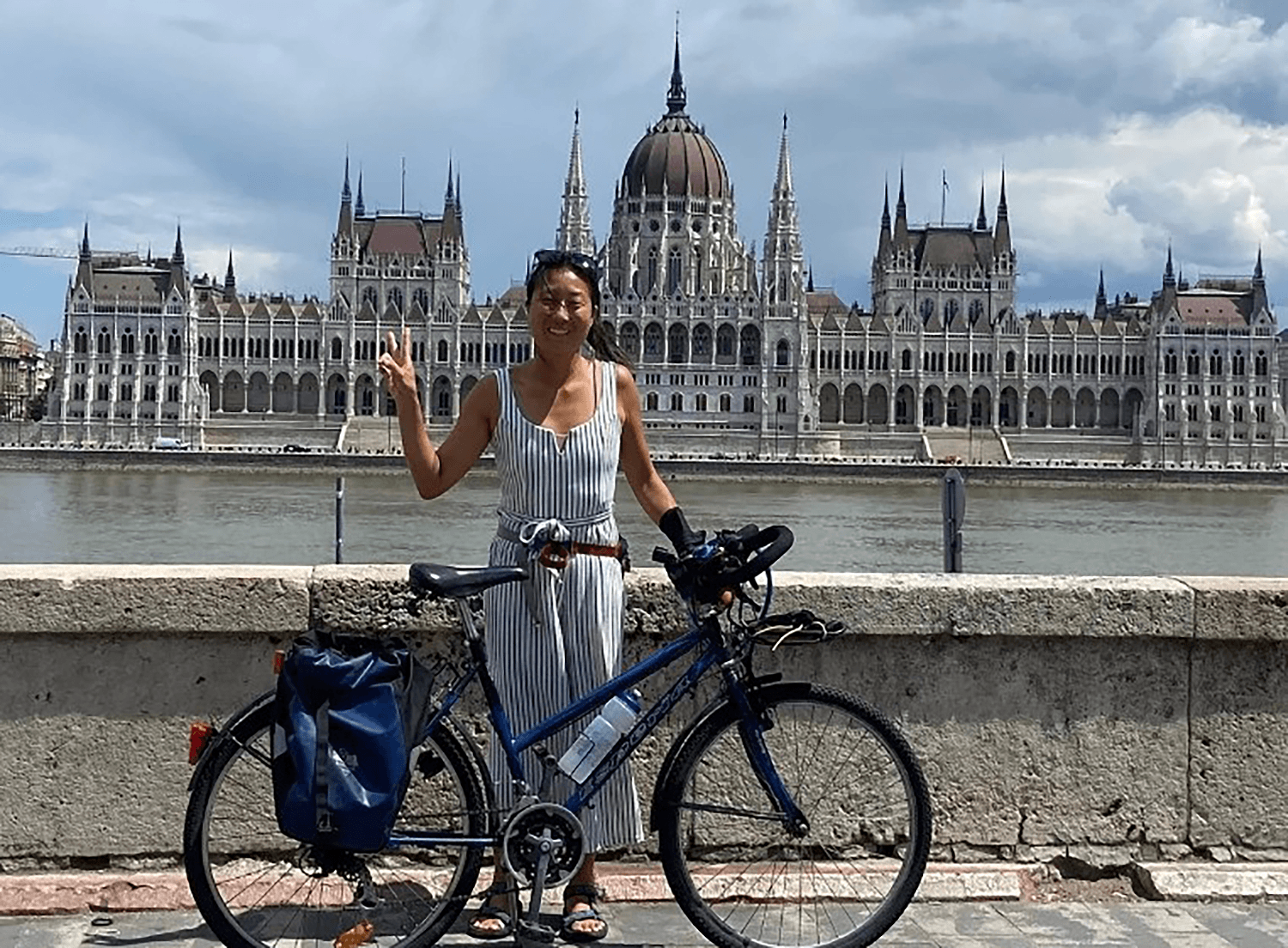
Jullietta Jung (pictured above) has been President of the Australia-wide grass roots group Better Streets since November 2025.
Prior to that she was a Program Manager at the Global Designing Streets Initiative and has worked in various active transport roles in the New South Wales state government.
Jullietta founded Sydney Night Rides in 2015 as a safe way for people, particularly women to ride together at night.
During our conversation, Jennifer mentions the Global Road Safety Partnership. You can find out more about it here.
You can find out more about Better Streets, the organisation that Jullietta leads, here.
At the time of producing this podcast, the 30Now website was not yet live, but there is a Position Paper about the topic here.
During our conversation we refer to an episode that we previously recorded with Lee Waters, who was the driving force behind the country of Wales adopting 20 mile per hour speed limits nationwide. You can listen to that podcast here.
There have been several reports that document the reduction in road deaths and serious injuries in Wales since the speed limit was reduced.
This report by the BBC says there have been 900 fewer injuries and few Councils have applied for higher speed limits but that the change is still not universally popular.
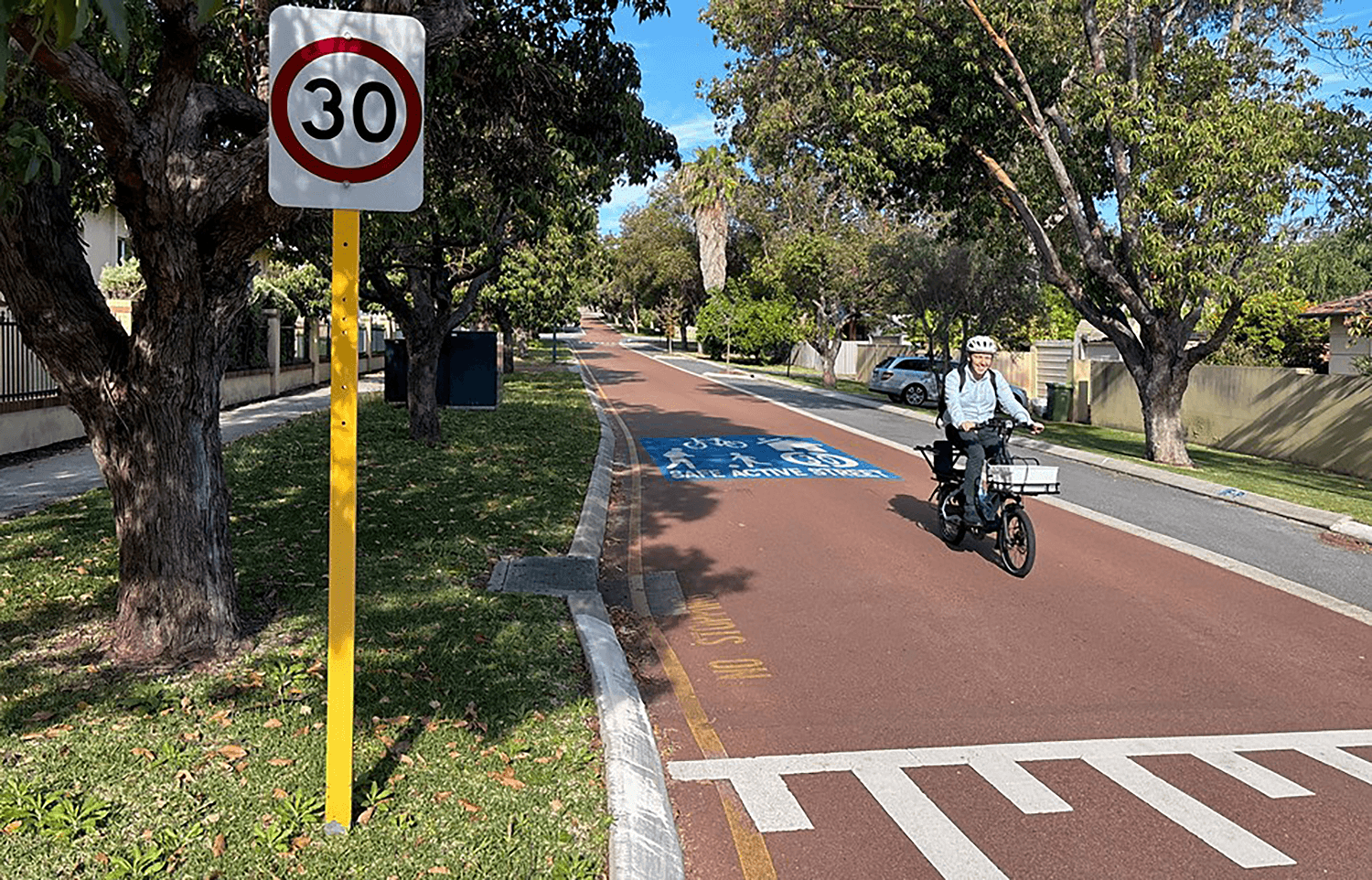
Meanwhile, Jullietta talked about the Safe Active Streets program in Perth, Western Australia.
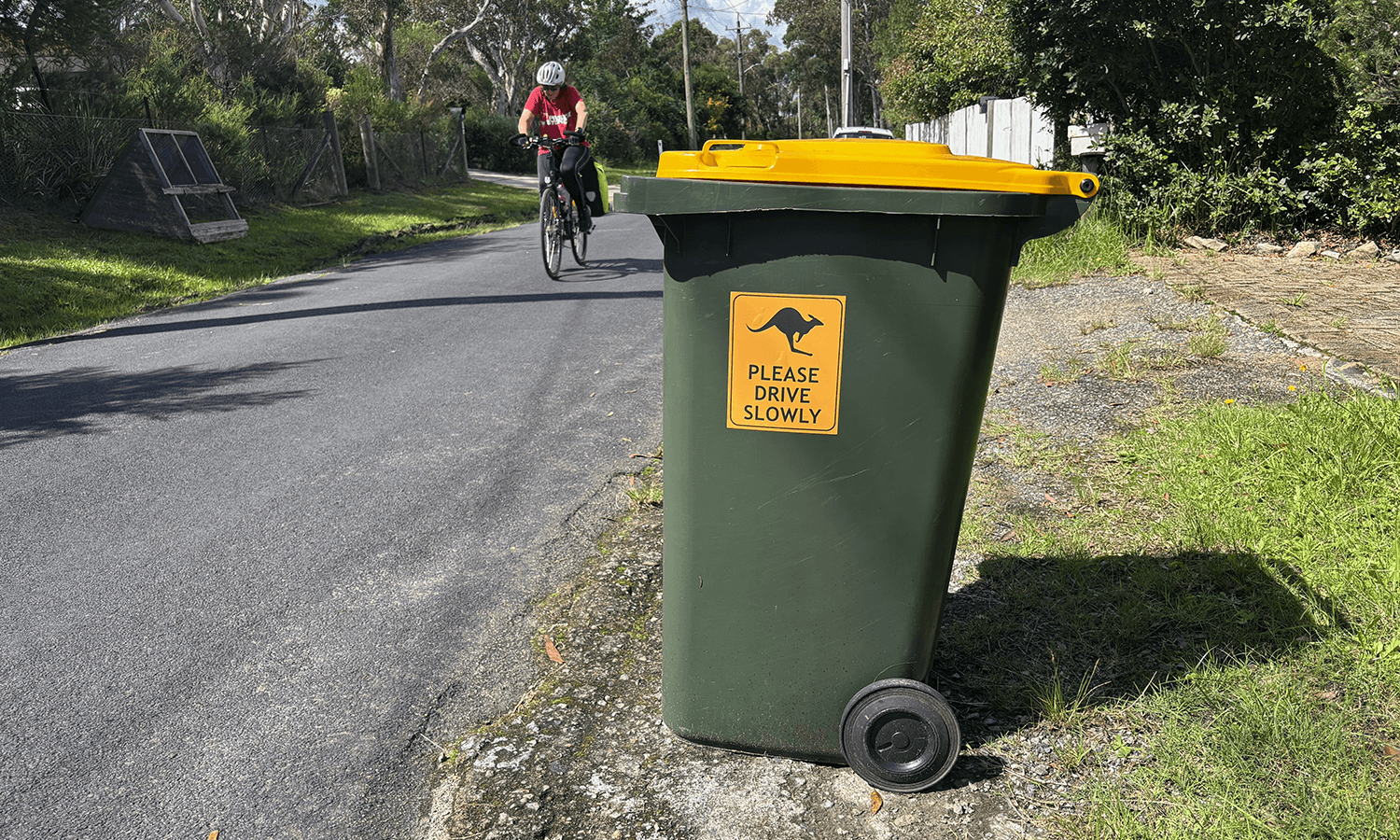
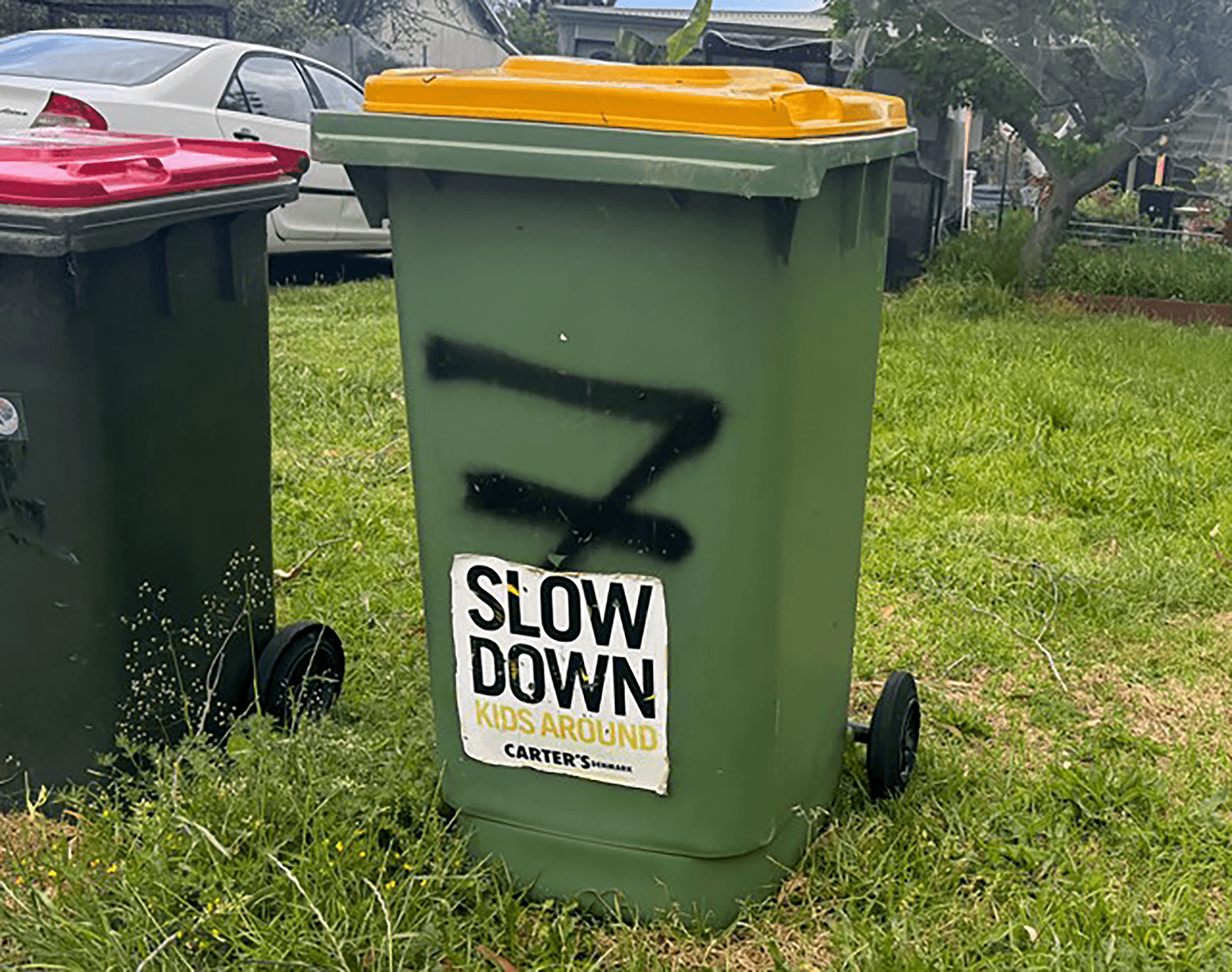
Jullietta also talked about evidence that many in the community want slower speed limits. In particular home owners have put stickers on their rubbish bins to ask motorists to slow down.
What’s Up?
In our “What’s Up” section at the end of each podcast we share what we’ve been doing or about to do.
This episode was recorded with guest co-host Sara Stace. Sara is Director of Cities at Vivendi Consulting
Sara is part of a team embarking on a three year project to look at how cycling infrastructure can be delivered more effectively. They’re running a one hour online workshop with the Liveable Cities Collective on 30th April 2026. You can find out more about the Liveable Cities Collective here or register for the “Let’s Accelerate Cycleway Delivery!” workshop via Humanitix here.
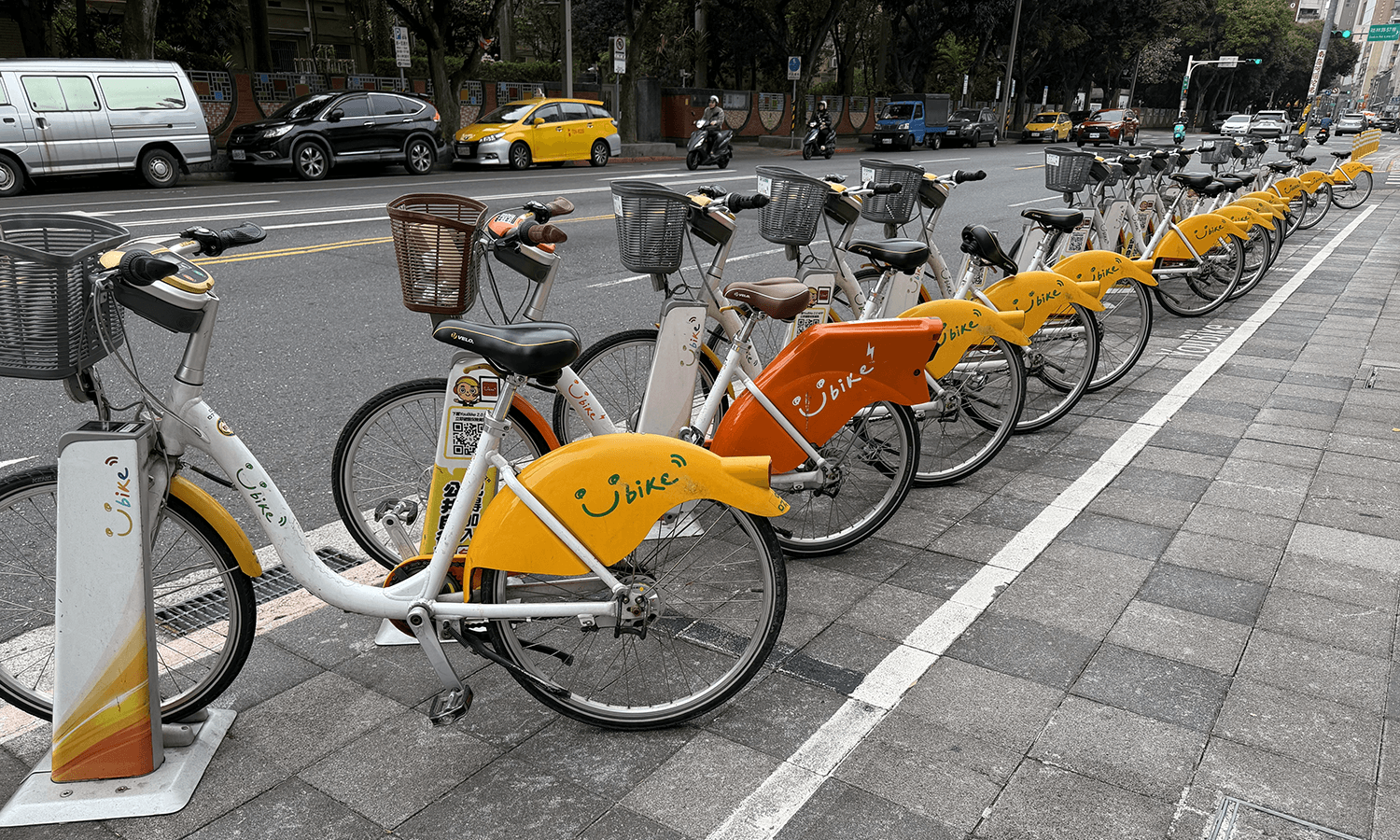
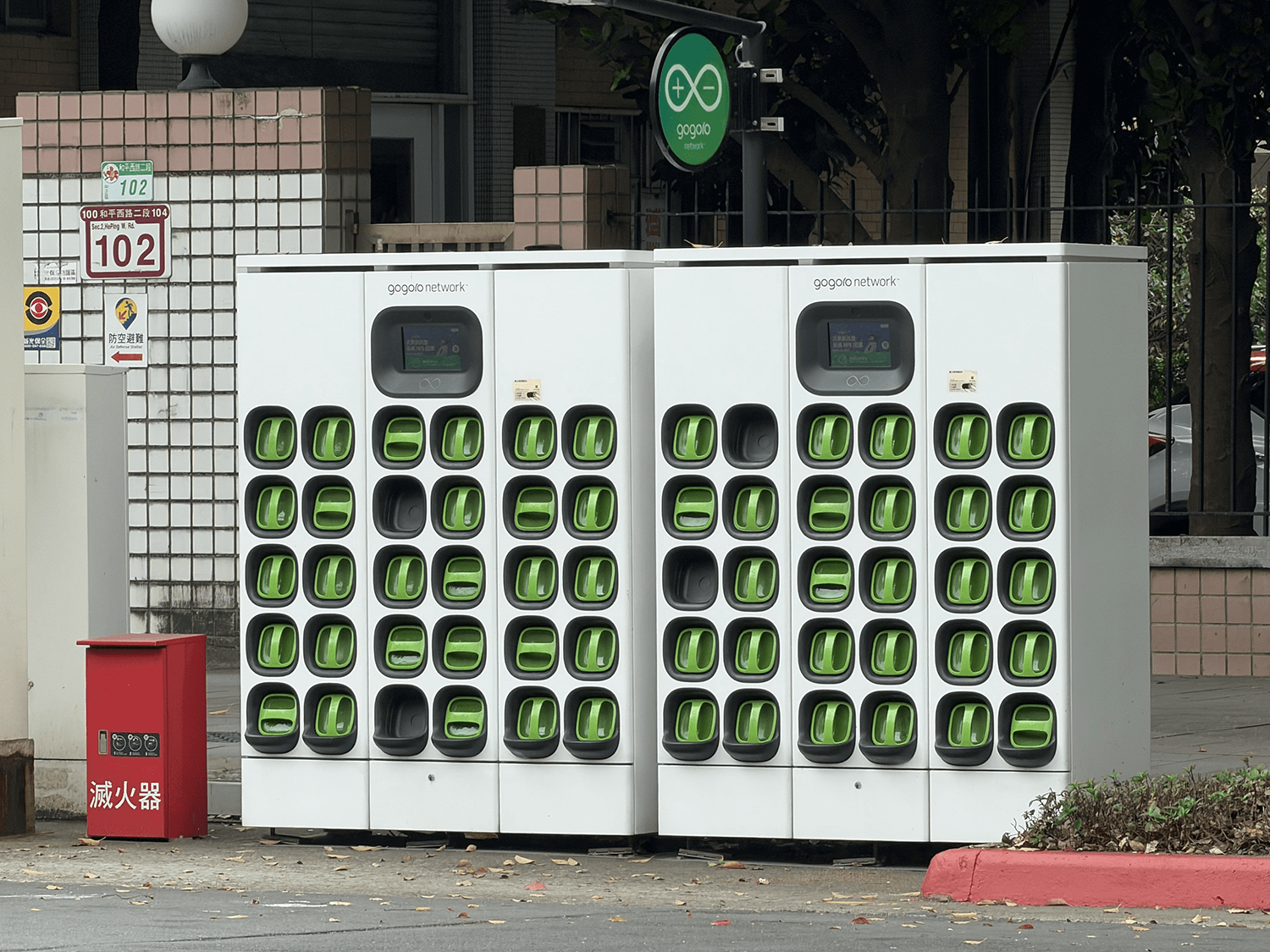
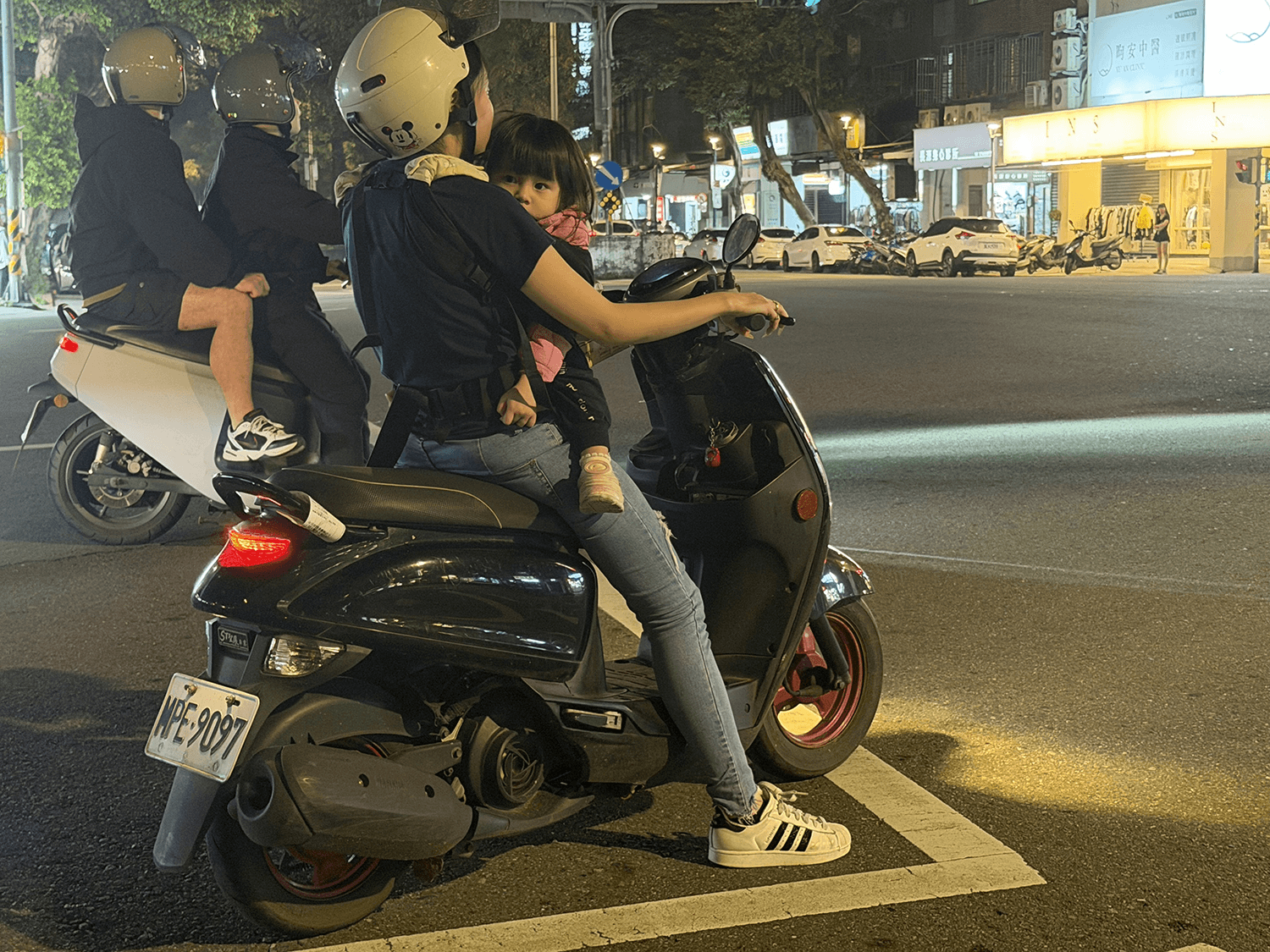
Phil talked about his recent visit to Taipei, Taiwan including both good and bad aspects of their transport system in this incredibly densely populated city of about seven million people across its greater urban area.
Here as some of his photos from his visit in late March 2026:
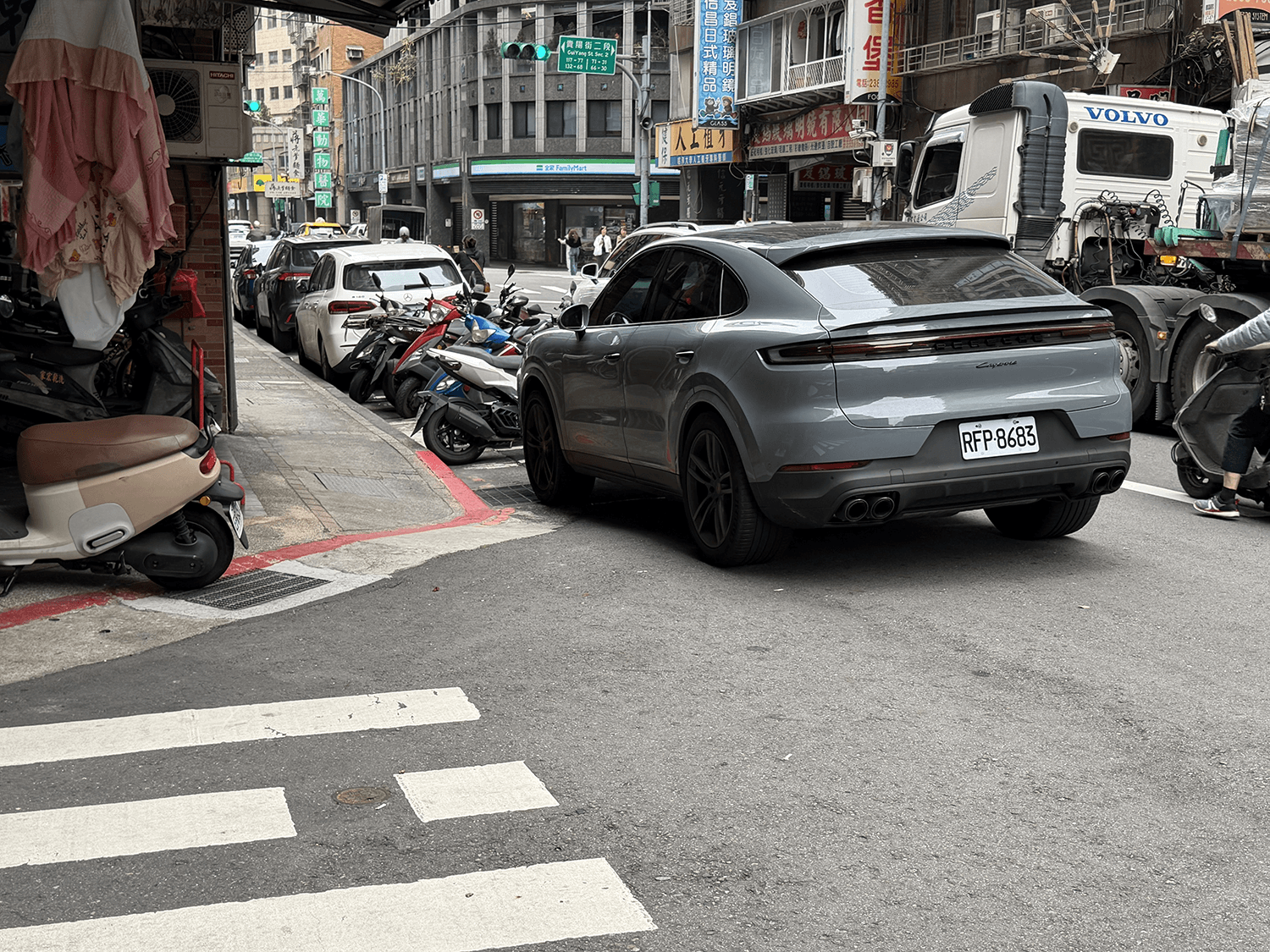
This is a “suburban” area of Taipei, not the city centre.Taipei’s U-Bike system is very heavily used day and night. The orange bike in the foreground is their new e-bike version which can be rented at slightly higher cost than the super-cheap to rent yellow analogue bikes.This is a roadside Gogoro battery swapping station for motor scooter riders. There are over 12,500 of these stations across Taiwan.This is one of two adjacent expo buildings that host the annual Taipei Cycle show. The driverless above ground metro line in the foreground is actually one of the oldest lines in Taipei. This venue is also served by a second, larger, faster metro line with a station underground.It’s common to see one, two or three young children being transported on motor scooters in Taipei. These scooters outnumber cars. The white scooter in the background is an electric Gogoro model, but most scooters are still noisy petrol models like the one in foreground. Parking fines are cheap in Taipei, so people with money often park in intersections or other illegal places, like this unattended Porsche.
As always, we’d love to hear from you with guest suggestions or any other feedback. Please use the Contact Us page on this website.
How Skye Duncan is Globally Multiplying Lessons She Learned in NYC
Our guest this month is Skye Duncan, a brilliant communicator who is Executive Director of the Global Designing Cities Initiative (GDCI).
This innovative and impactful organisation is primarily funded by Bloomberg Philanthropies with a worldwide team of over 45 expert staff. It has its roots in New York City, stemming from the era when Mike Bloomberg was mayor and oversaw huge advances in active transportation and liveable street design.
Skye was “inside the tent” holding a key design role within the NYC administration for much of this time. After Bloomberg’s term in office ended, Skye moved to NACTO (the National Association of City Transportation Officials) from which the GDCI was eventually spun off as a stand-alone entity.
Throughout all three of these organisations, a common thread has been Skye working with Janette Sadik-Khan, who was NYC Transportation Commissioner and is now Board Chair at GDCI.
Skye’s life has been full of adventure from day one, having been born in Papua New Guinea. This very poor developing South East Asian island nation would have only had a population of about 3 million at that time, of which a fraction of 1% at any time were “expats” from other countries and a much smaller subset again would have their children there.
After being raised in New Zealand, graduating in architecture and winning a major design competition, Skye successfully applied for a Fulbright Scholarship.
Sponsored by US government since 1946, only about 4,000 foreign students per year win Fullbright scholarships to attend some of the most prestigious USA universities. So the competition is intense and only about 20 New Zealanders are successful each year.
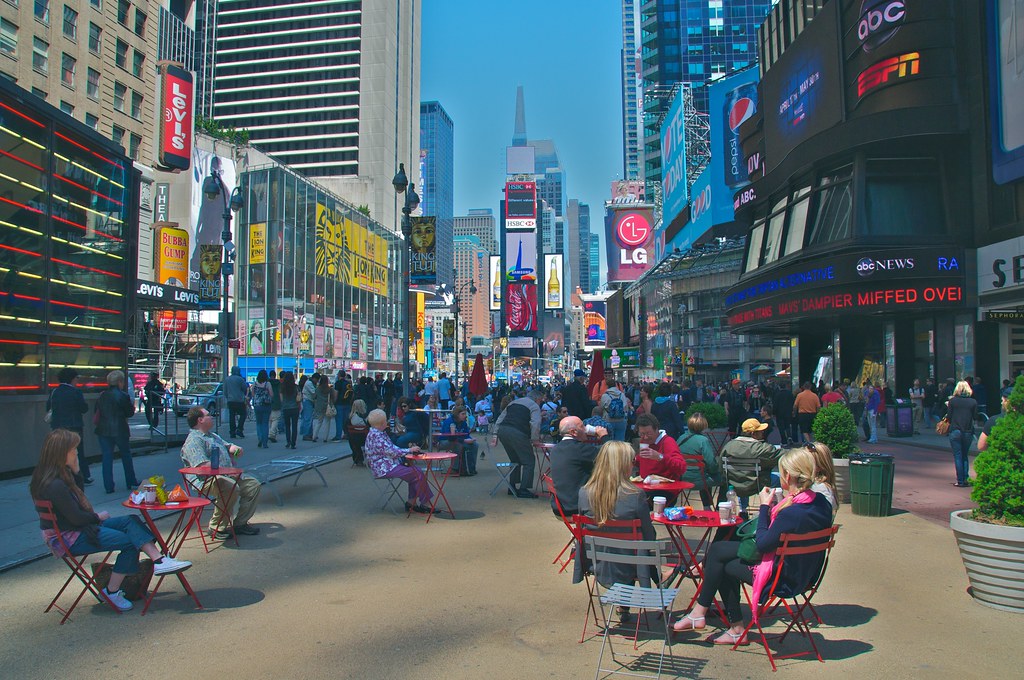
After graduating with master’s degree from Columbia University in New York City, Skye joined the NYC administration during the Mike Bloomberg mayoral era when dramatic changes were made, often using a “quick, light, cheap” strategy to prove their concept, such as most famously depicted here in Times Square.
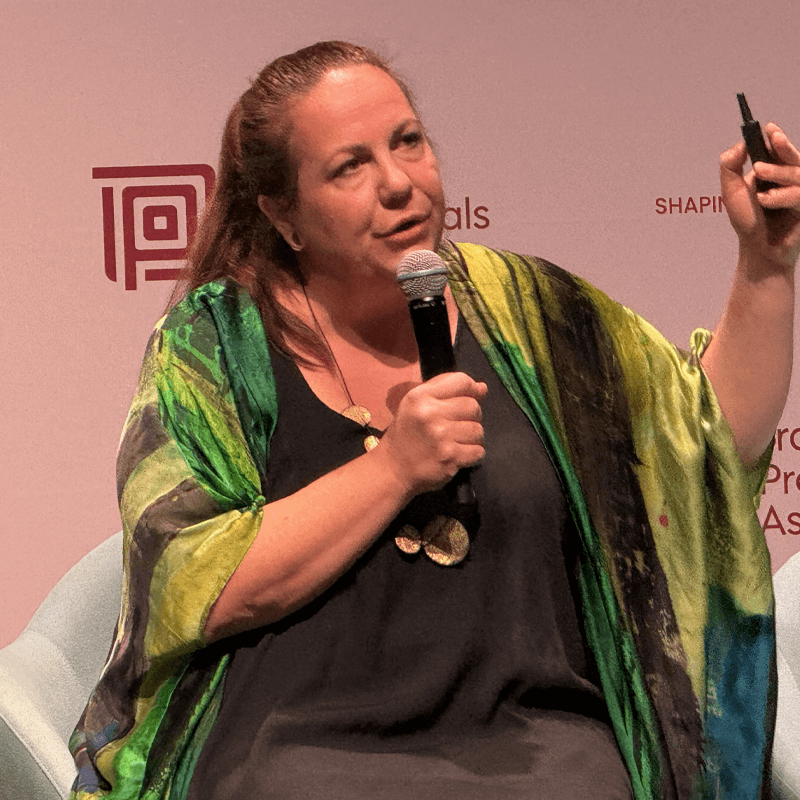
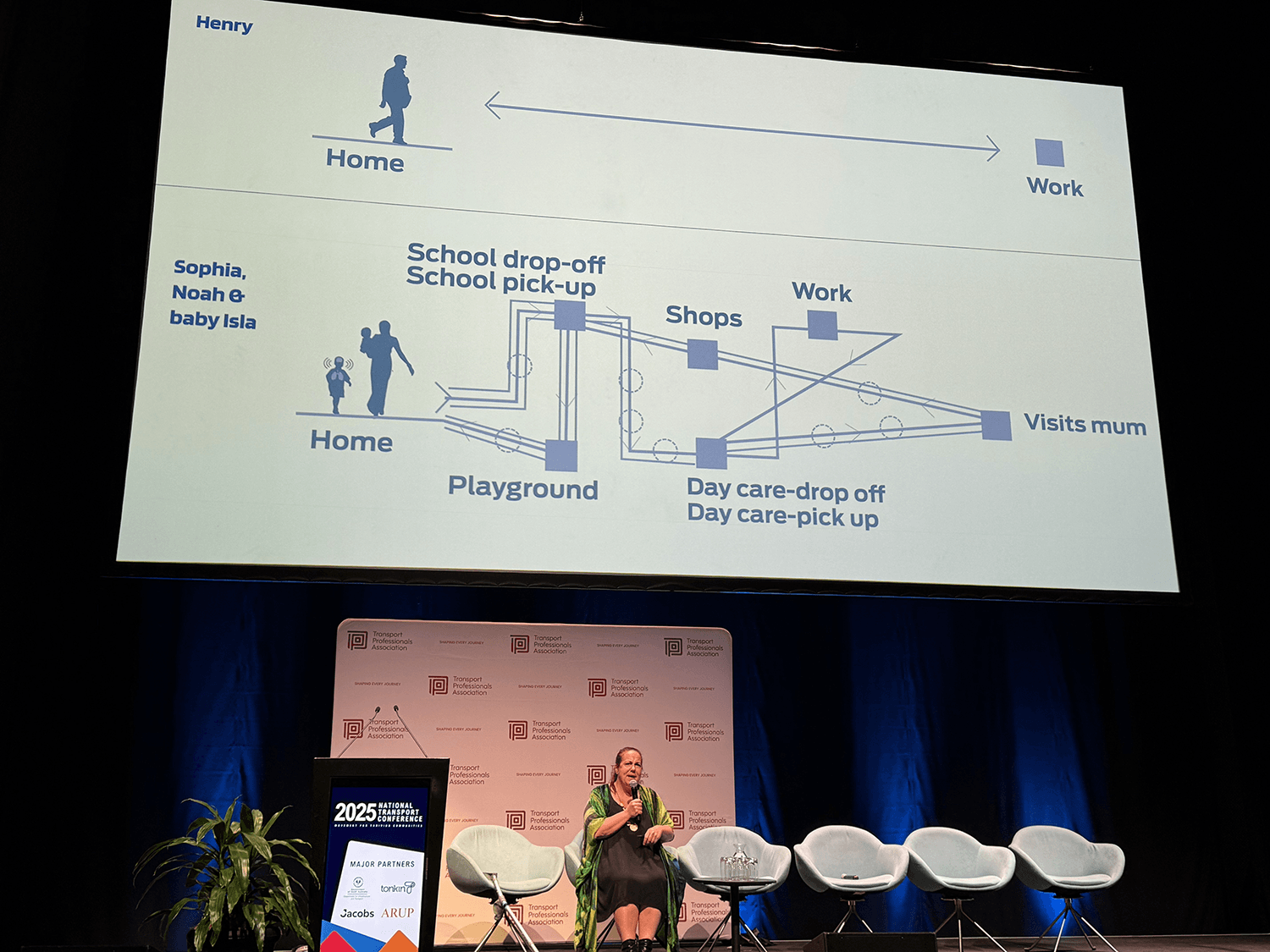
Skye giving a keynote presentation at the Transport Professionals Association conference in Adelaide, South Australia in September 2025.
In our interview, Skye gives unique perspectives on what we need to do to make our cities work better for everyone. As Skye’s presentation slide above so graphically illustrates, different members of our communities have widely varying needs from our city designs and transportation options. After graduating with master’s degree from Columbia University in New York City, Skye joined the NYC administration during the Mike Bloomberg mayoral era when dramatic changes were made, often using a “quick, light, cheap” strategy to prove their concept, such as most famously depicted here in Times Square.
What’s Up?
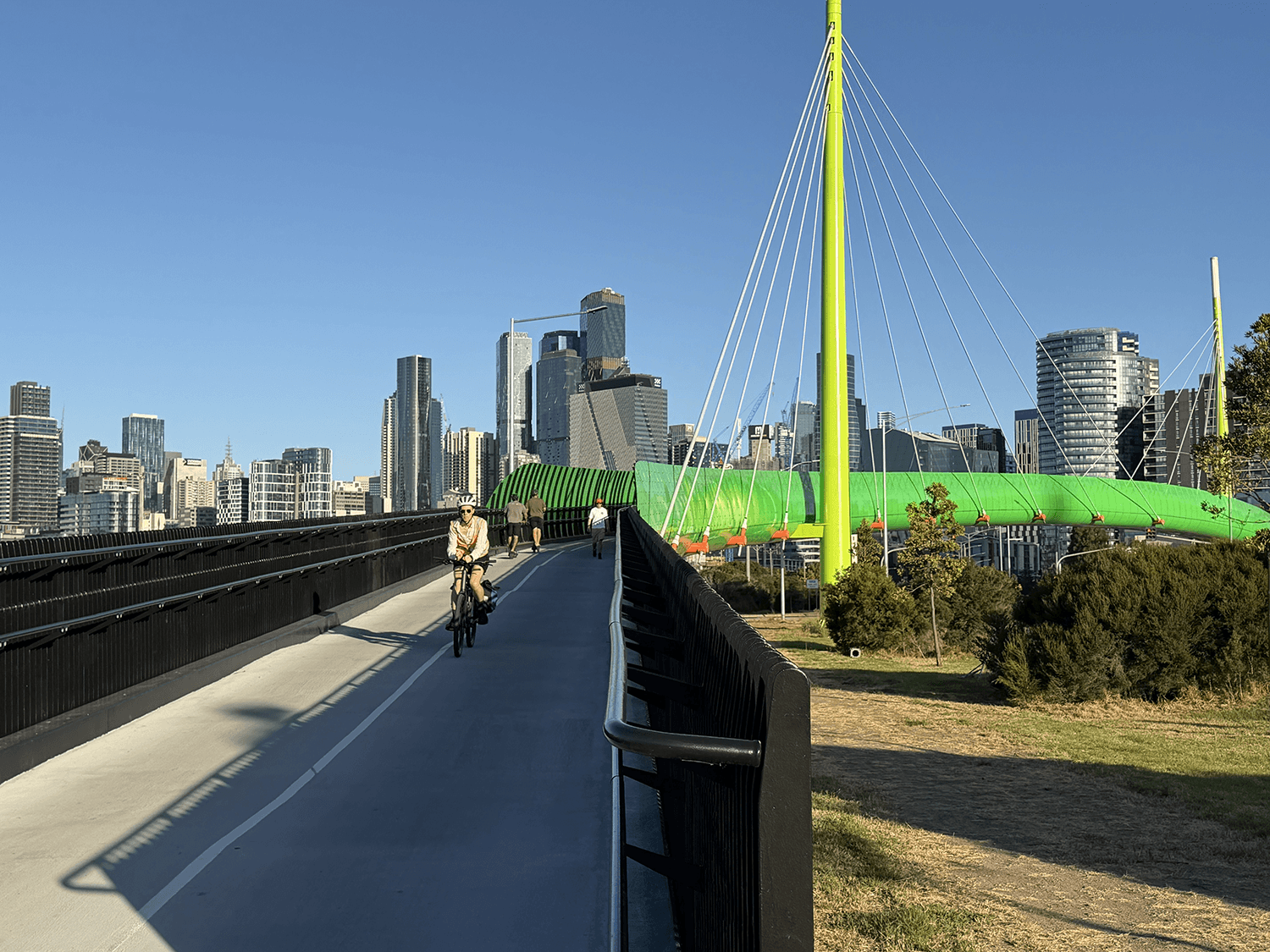
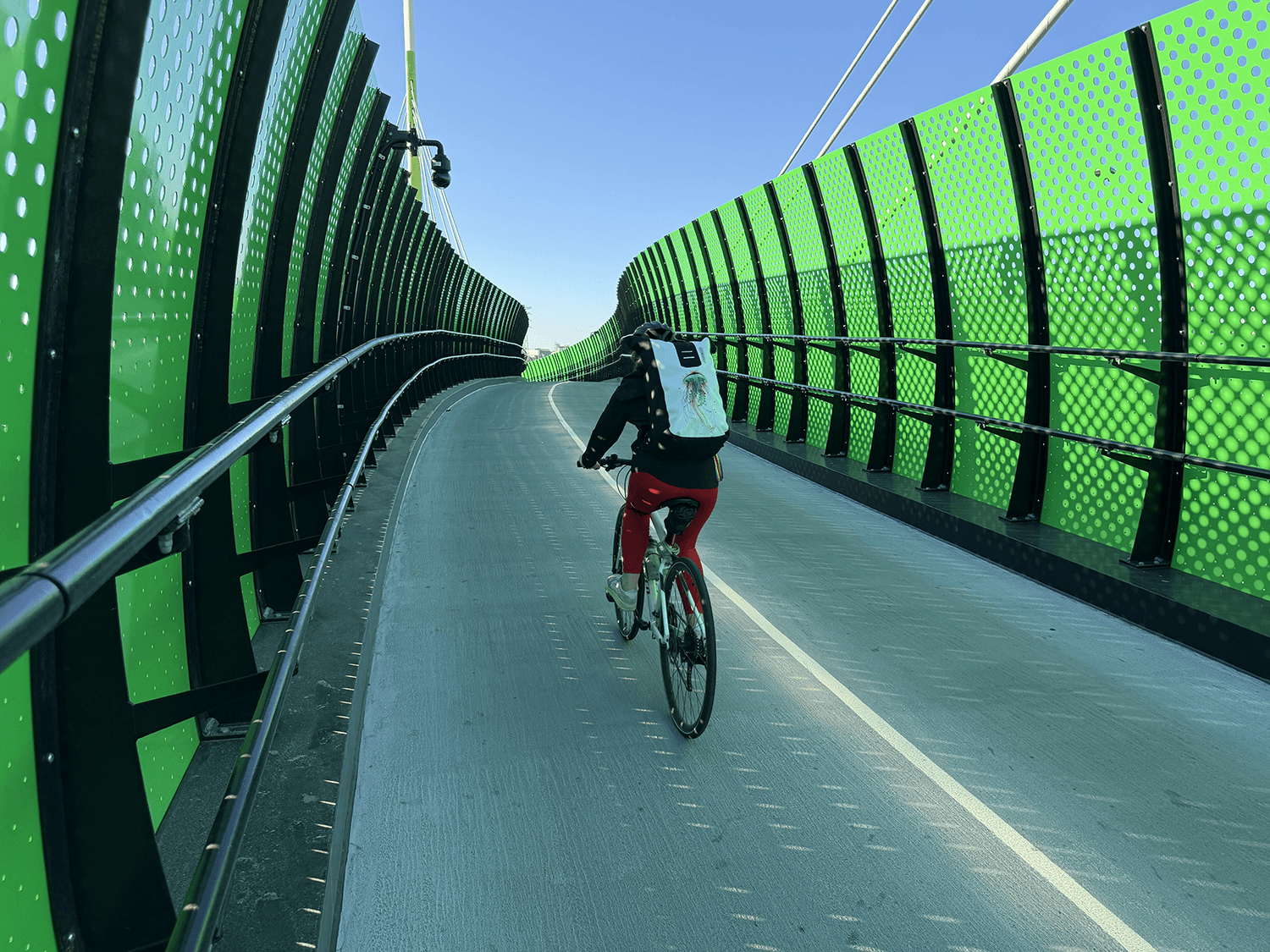
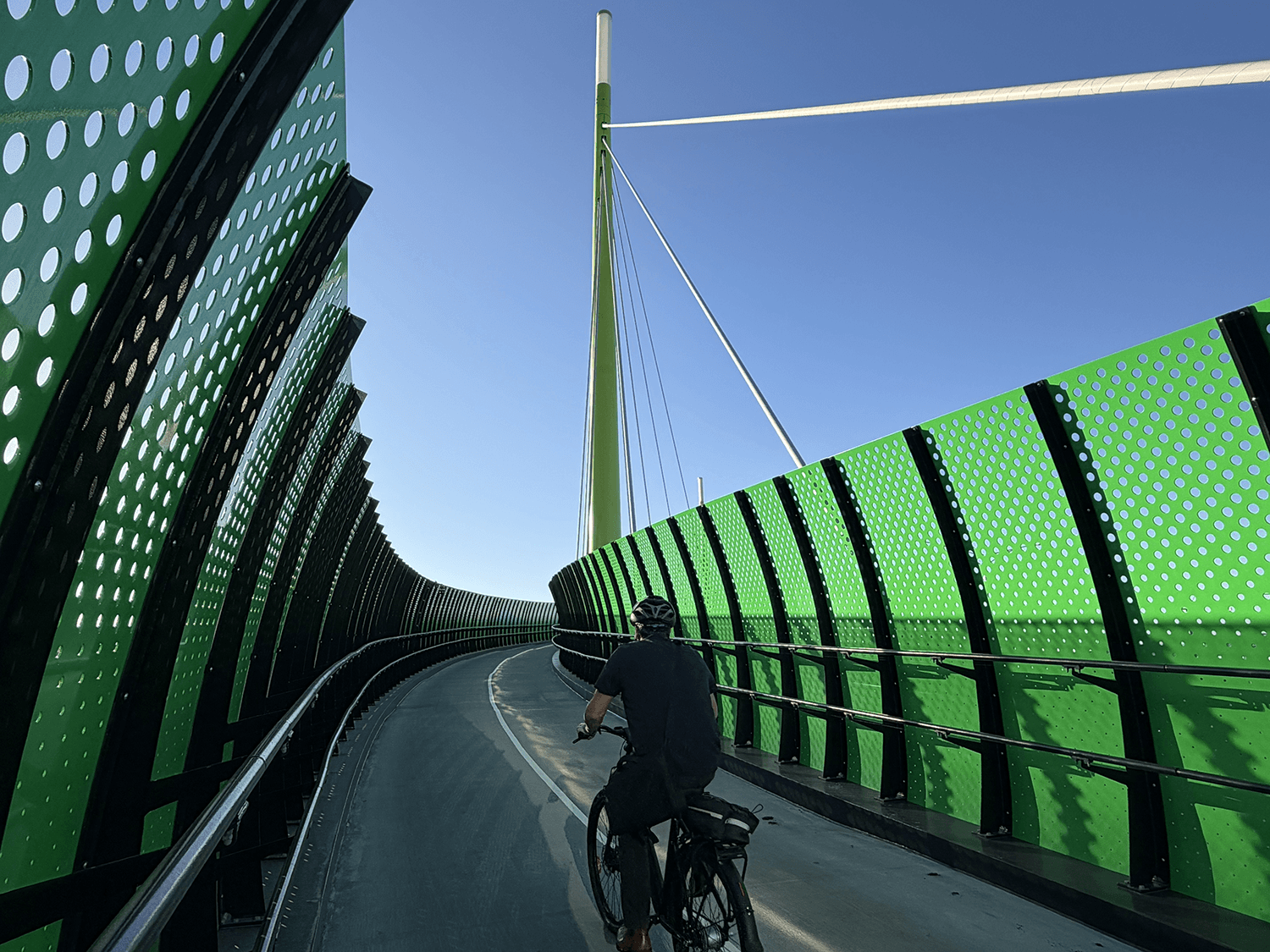
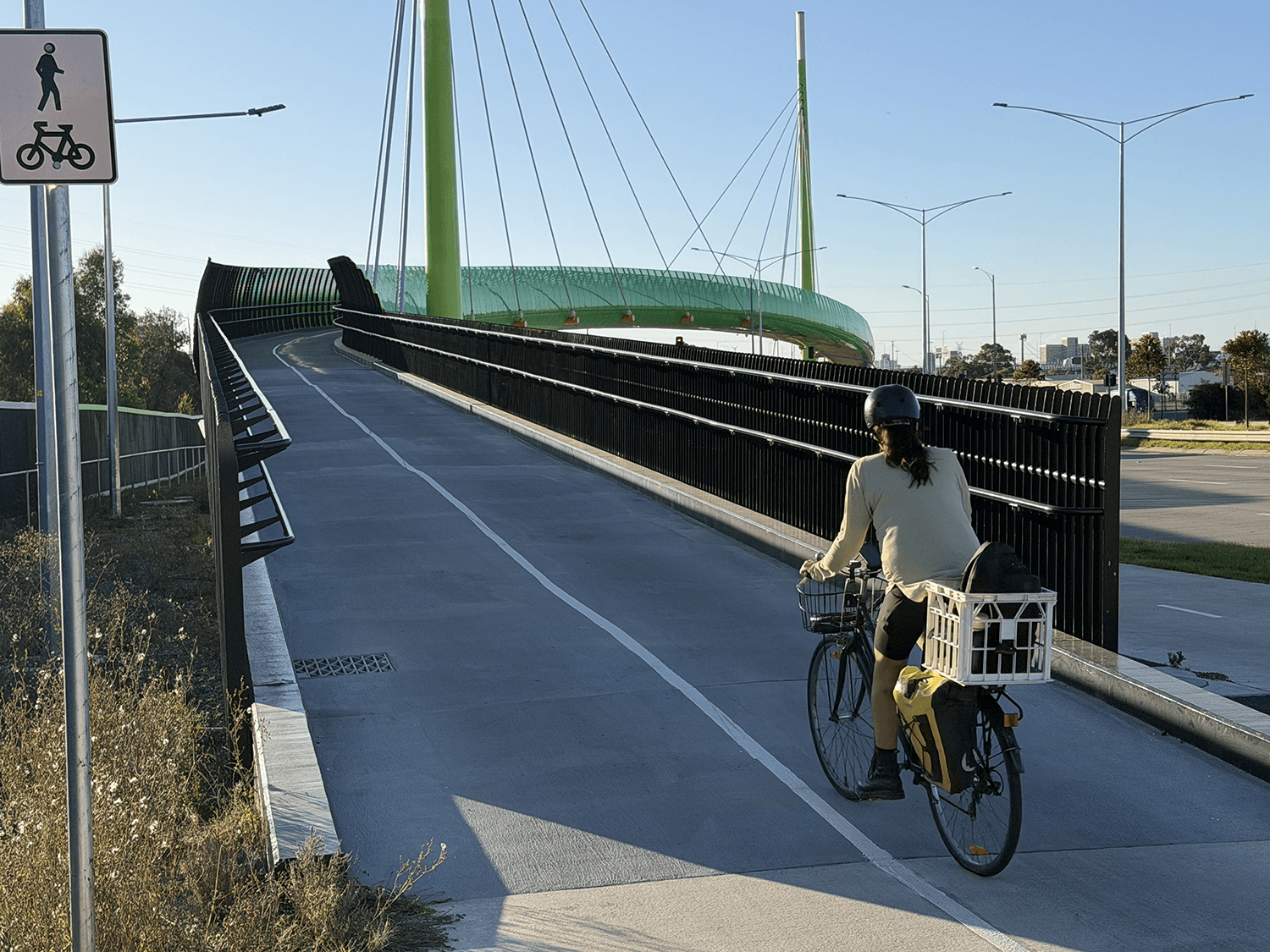
In our “What’s Up” section at the end of this podcast, Phil talks about riding the newly opened Iris Dixon Veloway, that includes this dramatic bright green curving bridge. Not surprisingly, it has been unofficially named “The Caterpillar”.
As always, we’d love to hear from you with guest suggestions or any other feedback. Please use the Contact Us page on this website.
Grant Ennis Explains the Dangers of Corporate Disinformation
Welcome to season three of The Squeaky Wheel Podcast!
We’re starting the year with an amazing guest who’s from San Francisco, USA, but lives in Paris, France and lectures for a university based in Melbourne, Australia!
Grant also speaks five languages and has previously worked for international aid agencies in a wide range of countries around the world including Mexico, Brazil, Paraguay, Honduras, Kenya and Syria.
Since 2020 Grant has been an adjunct Lecturer at Monash University. Grant’s teaching and research focuses on the political and commercial determinants of health, primarily exploring the political influence of the sugar, road, and fossil fuel lobbies.
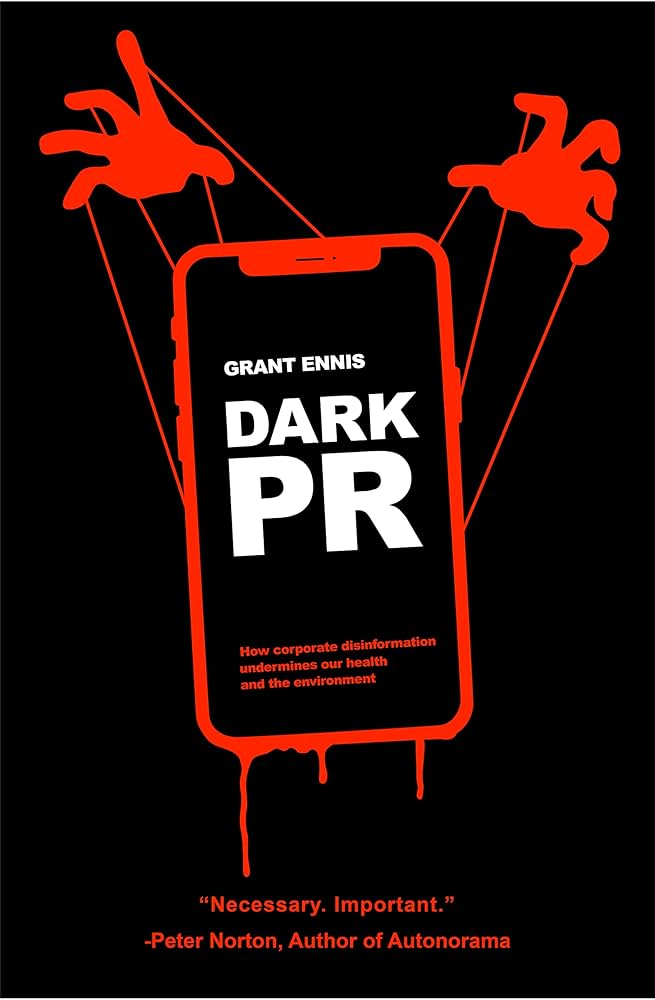
Grant has written the acclaimed book Dark PR: How Corporate Disinformation Undermines Our Health and the Environment. His work has been referenced in the Journal of Transport & Health, Traffic Safety Research, Alcohol Clinical & Experimental Research, The Australian, Michael West, the Australian Financial Review, the Irish Times, the Irish Examiner, the Irish Independent, among others.
Grant’s scholarship has had international reach and has contributed to parliamentary discussions related to nutrition and transport in Australia, Ireland, and the United Kingdom.
Dark PR includes details of “Nine devious frames” used by corporations and in particular their highly paid public relations consultants to effectively fight back against members of the public who are advocating for positive change, for example to make our streets safer for pedestrians and cyclists.
In our conversation we deliberately don’t go into these in detail, because there has already been an excellent interview recorded with Grant, that does unpack each frame in order, one by one. It was done by The War on Cars, a podcast that we highly recommend and are Patreon supporters of. You can listen to that podcast episode here.
In our conversation, Grant fires off many references to earlier research and reports. Here are the relevant links:
Unfortunately Squeaky Wheel Podcast co-host Irene McAleese is stepping away for a little while to deal with some personal commitments. The show will carry on with just Phil Latz for the moment, which means a much shorter What’s Up section.
Phil mentions World Bicycle Relief has just passed an amazing milestone of building and delivering over one million bicycles into the field. Here’s a great video that shows what this means to the one million recipients.
Look out for our next episode, due out on the third Thursday of March.